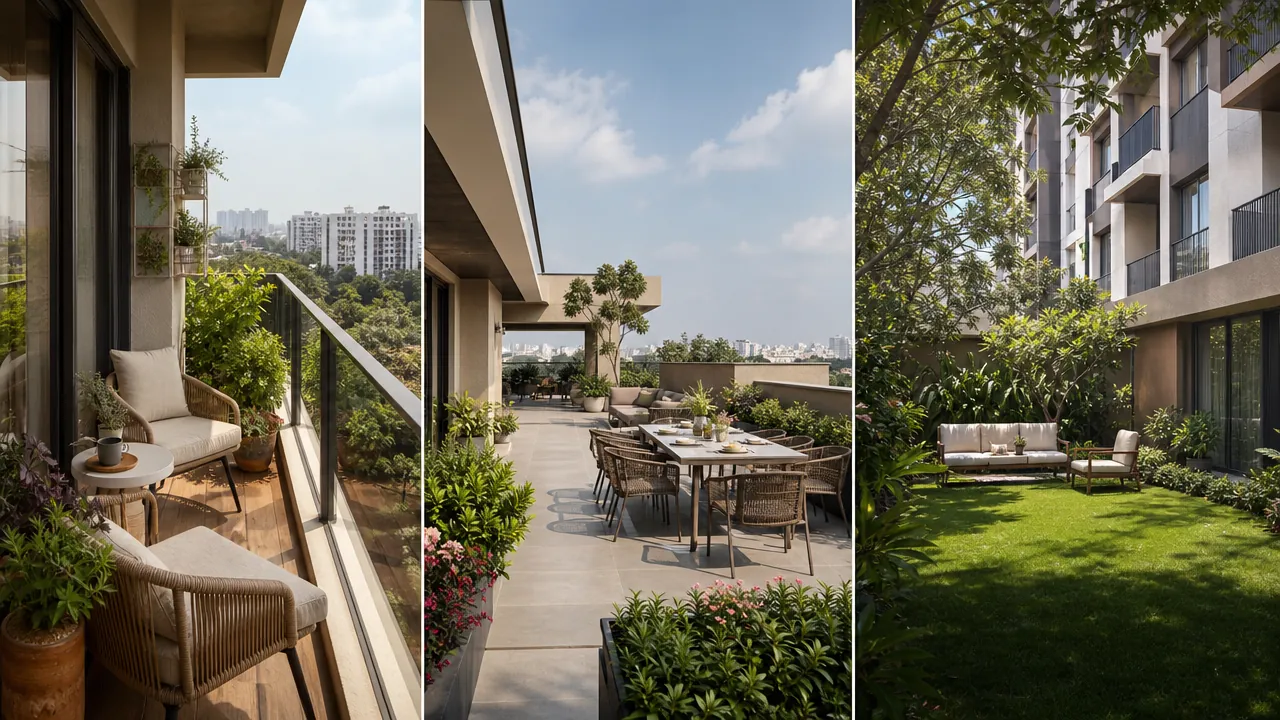
Balcony, Terrace or Private Garden? How to Compare Outdoor Space in an Indian Apartment
Short answer: choose a balcony for convenient, low-maintenance outdoor use; a private terrace for entertaining, pets and flexible layouts; or a private garden apartment for children, gardening and ground-level access. However, the largest advertised outdoor area is not automatically the best choice. Compare the space’s legal status, genuinely usable area, privacy, climate exposure, drainage, maintenance, safety and repair responsibilities before paying a premium.
A balcony may look ideal in a brochure, but feel too hot or exposed in daily use. A terrace can offer exceptional flexibility, yet bring waterproofing, heat and access concerns. A private garden can transform a ground-floor home, but it may also involve irrigation, pests, security and questions about whether the area is genuinely private.
This apartment outdoor-space comparison explains what to inspect when weighing a balcony vs terrace vs garden apartment in India.
Start With the Legal Status: Is the Outdoor Space Actually Private?
Before comparing furniture layouts or plant capacity, establish what you are legally buying or receiving the right to use. The words “private terrace” and “private garden” may describe exclusive access, but they do not by themselves settle ownership.
Under the Real Estate (Regulation and Development) Act, 2016, terraces, parks, recreational spaces and similar areas may fall within the broader category of common areas, subject to the project’s documents and the applicable legal framework. At the same time, a project’s sanctioned plan, declaration, apartment documents or sale agreement may create an exclusive-use arrangement for a particular apartment. The position can also depend on the relevant state apartment-ownership law, local regulations and association documents.
That means a terrace or garden may be:
- Part of the apartment’s legally documented area or appurtenant rights.
- A common area reserved for the exclusive use of one apartment.
- A common facility that residents may access collectively.
- An area subject to specific restrictions imposed by the association or approved plans.
Do not assume that a separate entrance, boundary wall or marketing label proves ownership. Ask a qualified local property lawyer to review the documents before paying a substantial premium for an outdoor space.
How balconies, terraces and gardens can differ from exclusive-use areas
A balcony is commonly attached to an apartment and shown in the sanctioned layout, but its legal treatment and permitted alterations still need confirmation. A terrace may be attached to a top-floor apartment, located above a podium or shared by several residents. A garden may be directly accessible from a ground-floor home while remaining a common area with exclusive-use rights.
The practical distinction is important. Ownership, exclusive use and maintenance responsibility are not always the same thing. You might have the right to use a garden but not the right to build a permanent shed. You might have exclusive terrace access but still be responsible for cleaning while the association controls structural waterproofing. You might be prohibited from installing a pergola, barbecue, glass enclosure or heavy planters even if the space is described as private.
Documents to check before paying a premium for outdoor space
Review these documents and request written clarification where the wording is unclear:
- Sanctioned building plan: Confirm the location, dimensions, access and intended use of the balcony, terrace or garden.
- Registered sale agreement: Check whether the outdoor area is included, described as an appurtenant area or granted through an exclusive-use clause.
- RERA disclosures and project plans: Compare the promised feature with the approved and disclosed project details.
- Declaration or apartment-ownership documents: These may explain common areas, limited common areas and use rights.
- Association or society bylaws: Look for rules on pets, plants, furniture, alterations, noise, cooking and access.
- Maintenance schedule: Establish who handles waterproofing, drains, railings, irrigation, lighting and structural repairs.
- Handover and defect-liability records: For completed projects, ask about reported seepage, flooding and repair work.
A written clarification is safer than a sales conversation. If the outdoor space is a major reason for choosing the apartment, make sure the promised right and responsibility are reflected in the legally relevant documents.
Balcony vs Terrace vs Private Garden: What Each Space Is Best For
Balconies for everyday fresh air, plants and low-maintenance seating
A balcony usually works best when you want quick, convenient access to the outdoors without managing a large area. It can accommodate two chairs, a compact table, vertical planters, drying space or a small reading corner, depending on its shape and building rules.
Balconies suit buyers who value:
- Morning tea or evening relaxation.
- Natural ventilation and daylight.
- A few plants or a kitchen herb garden.
- Lower cleaning and furnishing costs.
- Outdoor access without leaving the apartment level.
Their limitations are equally important. A narrow balcony may have little furniture potential. Wind, rain, dust and direct sun can reduce comfort. Views into neighbouring apartments may affect privacy, while traffic noise can make the space less relaxing than it appears during a brief site visit.
Private terraces for entertaining, pets and flexible layouts
A private terrace apartment can provide the most adaptable outdoor environment. A sufficiently large terrace may support seating, container gardening, a play zone, pet use, exercise equipment or occasional gatherings. It may also offer better separation between indoor and outdoor activities than a small balcony.
Terraces are attractive to buyers who want:
- Space for guests and outdoor dining.
- Larger planters or container trees.
- A pet-friendly area, subject to association rules.
- Flexible furniture arrangements.
- A rooftop or open-sky experience.
The trade-off is greater exposure. A terrace can become extremely hot in summer, receive intense monsoon rain and collect leaves, dust and debris. Waterproofing defects may affect the apartment below or adjoining areas. Large planters, outdoor kitchens and heavy furniture can also create load, drainage or approval concerns.
Private gardens for children, pets and ground-level living
A private garden apartment is often appealing to families who want children to play outdoors, residents who enjoy gardening or pet owners seeking ground-level access. It can make an apartment feel more like a small house while retaining access to shared amenities.
A garden is particularly suitable for:
- Supervised play for young children.
- Dogs and other pets, where permitted.
- Lawn, shrubs, herbs and seasonal plants.
- Outdoor seating close to the living room.
- Residents who dislike stairs or lifts for every outdoor activity.
Ground-floor living also brings distinct concerns. A garden may be visible from pathways, security posts or neighbouring homes. It may attract insects, require regular irrigation and be vulnerable to waterlogging. If the boundary is low or poorly lit, security and privacy may be weaker than expected. Confirm whether the area is actually private or simply an exclusive-use portion of a common landscape zone.
Compare Usable Space Instead of Advertised Apartment Area
The advertised apartment size does not tell you how useful an outdoor space will be. Super built-up area includes proportionate common areas and is not a substitute for measuring the balcony, terrace or garden itself.
Measure the functional area, access routes and furniture potential
Record the outdoor space’s length and width, then subtract areas that cannot be used comfortably because of:
- Columns, structural walls and service shafts.
- Railings, parapets and fixed planters.
- Drainage channels and inspection covers.
- Outdoor air-conditioning units or pipes.
- Narrow corners that cannot accommodate furniture.
- Door swings and required access paths.
A 100-square-foot balcony may provide only a small seating zone once the door clearance and safety distance are considered. A 500-square-foot terrace may feel less useful if half of it is occupied by service equipment, low headroom or inaccessible edges. A 300-square-foot garden may be more functional than either if it has direct living-room access, reliable drainage and enough clear ground for play.
Sketch the space with approximate furniture. Can a table and four chairs fit without blocking the door? Is there room to move around a planter? Can children or pets use it without approaching a dangerous edge? Practical layout often matters more than headline area.
How Indian Climate and Orientation Affect Outdoor-Space Comfort
India’s climate varies significantly between regions, and even apartments in the same city can experience different outdoor comfort depending on orientation, surrounding towers and shading.
Assess sunlight, shade, ventilation and summer heat
Visit the apartment at different times if possible. A west-facing balcony or terrace may receive intense afternoon heat, while a north-facing space may be cooler but darker. A south-facing space can benefit from seasonal shade if the building design is suitable. Nearby towers may block wind and daylight or create privacy problems.
Check:
- Direct sun in the morning and afternoon.
- Whether a slab, canopy or neighbouring building provides shade.
- Cross-ventilation and prevailing wind direction.
- Heat reflected from glass, concrete or nearby walls.
- Whether plants and furniture can tolerate the exposure.
- The view and privacy when doors and windows are open.
A large terrace without shade may be uncomfortable for much of the year. Conversely, a shaded balcony may support more consistent daily use despite having less area.
Check monsoon exposure, drainage and waterlogging risk
Monsoon performance should be assessed before purchase, not after the first heavy rainfall. Ask residents and security staff whether the project has experienced seepage, blocked drains, terrace ponding, basement flooding or garden waterlogging.
Inspect the slope of the terrace or balcony floor. Water should flow towards functioning outlets rather than collect near doors, walls or parapets. Look for staining, algae, cracked joints, loose tiles and damp patches on ceilings below. In a garden, check whether soil is graded away from the building and whether rainwater has a clear route to a drain or recharge system.
Regional rainfall patterns differ considerably, so a design that performs well in a relatively dry location may need closer inspection in a coastal or high-rainfall city. Ask for waterproofing records and details of any previous repairs.
Maintenance Costs: Balcony, Terrace and Garden Responsibilities
The best apartment outdoor space is not necessarily the one with the lowest purchase price. Estimate recurring work, replacement costs and the time required to keep the area usable.
Balcony maintenance in India: railings, drainage and seepage
Balcony maintenance usually includes cleaning, drain inspection, railing care and checking for seepage. Metal railings may corrode in coastal or humid locations. Glass panels need frequent cleaning in dusty areas. Loose tiles, cracked grout and blocked outlets can allow water to reach the slab or interior wall.
Ask who is responsible for repairing the railing, slab, waterproofing layer and drain. A resident may handle routine cleaning while the association manages structural components, but the exact division should come from the governing documents.
Terrace waterproofing, drainage outlets and heat-resistant finishes
Terraces require more active maintenance than balconies. Key components include:
- Waterproofing membranes and protective screed.
- Correct surface slopes and clear outlets.
- Expansion joints and parapet-wall junctions.
- Flashing around pipes and service penetrations.
- Durable, heat-resistant and slip-resistant finishes.
- Shade structures that do not damage the waterproofing system.
Do not drill into the floor, install permanent posts or place very heavy planters without written approval. A later leak may become difficult to trace, particularly if several residents have altered the surface. Ask whether waterproofing has a warranty, when it was last renewed and who pays for repairs affecting the apartment below.
Garden irrigation, pruning, pests and mosquito prevention
A garden requires regular attention even when it looks low-maintenance at handover. Budget for watering, pruning, soil replacement, pest treatment, lawn care and seasonal replanting. Poor irrigation can damage external walls; overwatering can create dampness, fungus and mosquito breeding conditions.
Ask whether irrigation is manual or automatic, whether a gardener is included in maintenance charges and how water consumption is allocated. Check for stagnant water in trays, drains, low spots and decorative features. A garden should also have sufficient lighting, safe electrical points and a maintenance route that does not require workers to pass through the apartment.
Privacy, Noise, Dust and Air Quality in an Apartment Outdoor Space
A visually attractive outdoor area may be unusable if it exposes residents to constant noise, dust or overlooking.
Inspect sightlines from neighbouring buildings, roads and common areas
Stand in the space and look in every direction. Can residents in the opposite tower see the seating area? Does a common pathway run beside the garden? Is the terrace visible from a higher block? Are service staff, delivery workers or visitors likely to pass close to the boundary?
For balconies, inspect the position and height of neighbouring windows. For terraces, check whether parapets provide adequate visual screening without blocking ventilation. For gardens, review boundary walls, planting, gates and access controls. Screening plants may improve privacy, but they require time and may not be permitted near fire-access routes.
Also visit during peak traffic hours. Road noise, construction activity, generators, children’s play areas and clubhouse events can significantly change the experience. Local air-quality conditions may further limit outdoor use during polluted periods, especially for children, older residents and people with respiratory conditions.
Safety and Security Checks for Families, Children and Pets
Balcony railing, parapet and child-safety checks
Inspect railing height, gaps, rigidity, corrosion and the condition of fixings. Avoid relying on furniture or planters as informal barriers. Check whether a child could climb the design and whether a pet could squeeze through or push against it.
Confirm that doors have secure locks and that safety grills or netting are permitted before installing them. A permanent alteration may need association or local approval. Never place chairs, benches or large pots close to a railing where they could create climbing access.
Terrace access, lighting and permitted structures
A terrace should have a controlled entry system, safe stairs or lift access, adequate lighting and clear emergency routes. Confirm whether other residents, service staff or facility workers can enter. If the terrace is above a podium or near a mechanical area, ask about noise, access schedules and safety barriers.
Pergolas, decks, glass rooms, sheds, barbecues and outdoor kitchens may affect fire safety, structural loads, waterproofing or common-area use. Obtain written approval before planning them.
Ground-floor garden security and boundary treatment
For gardens, check gates, boundary height, lighting, camera coverage and the distance from public roads or internal paths. A low decorative fence may provide little security. Look for nearby utility gates, service entrances and points where a child or pet could leave the space.
A garden should also be safe during heavy rain. Examine electrical fixtures, drain covers, slippery paving, retaining walls and any level changes. If the home is close to a basement ramp or low-lying landscape, ask about previous waterlogging.
A Weighted Apartment Outdoor-Space Comparison Checklist
Use the same scoring method for every property. Give each category a score from 1 to 5, then multiply it by the importance you assign to that category.
| Category | Suggested weight | What to assess |
|---|---|---|
| Usable area and layout | 15% | Clear floor area, furniture fit and access |
| Sunlight, shade and ventilation | 10% | Comfort across seasons and times of day |
| Privacy and noise | 10% | Sightlines, traffic, construction and common paths |
| Monsoon resilience | 15% | Slope, outlets, seepage and waterlogging history |
| Maintenance burden | 10% | Cleaning, plants, repairs and recurring costs |
| Waterproofing and drainage | 15% | Records, responsibility and visible condition |
| Safety and security | 10% | Railings, gates, lighting and child or pet risks |
| Lifestyle suitability | 10% | Entertaining, gardening, children or pets |
| Furnishing and resale potential | 5% | Adaptability and likely buyer appeal |
The weights should reflect your household. A pet owner may increase lifestyle and boundary-security scores. A buyer in a heavy-rainfall city may give more weight to waterproofing and drainage. Someone who travels often may prioritise low maintenance over garden size.
Balcony vs Terrace vs Garden: Which One Should You Choose?
Choose a balcony for lower upkeep and convenient daily use
A balcony is usually the sensible choice when you want fresh air, plants and a compact seating area without taking on extensive maintenance. It works well for apartment residents who spend limited time outdoors or prefer predictable cleaning and repair requirements.
Choose it when the balcony has good shade, ventilation, privacy and drainage. A smaller but comfortable balcony may outperform a larger, exposed terrace in everyday use.
Choose a private terrace for maximum flexibility and entertaining
Choose a private terrace when you genuinely need space for guests, larger plants, pets or multiple outdoor activities. It can be the best option for buyers willing to manage heat, monsoon exposure, waterproofing and furnishing restrictions.
Confirm legal access, structural limitations and repair obligations before paying for it. A terrace is valuable only when it is safe, usable and supported by clear documentation.
Choose a private garden for children, pets and greenery
A private garden apartment may be the strongest fit for families with young children, pet owners and enthusiastic gardeners. Select it when the garden has reliable drainage, adequate privacy, secure boundaries and convenient access to the home.
Be cautious if the garden is shaded all day, overlooked by common areas, prone to waterlogging or described vaguely in the documents. Ground-floor convenience should not come at the cost of security or constant maintenance.
Questions to Ask the Builder and Residents Before Buying
Ask the builder, association or current residents these questions and request important answers in writing:
Ownership, exclusive-use rights and association rules
- Is the outdoor space included in the registered sale documents?
- Is it owned by the apartment owner, or is it a common area with exclusive-use rights?
- Which state law, declaration or association document governs the arrangement?
- Who can access the space for inspection, repairs or maintenance?
- Are pets, planters, furniture, drying clothes or gatherings restricted?
- Are grills, pergolas, decking, screens, sheds or permanent landscaping permitted?
Repair responsibility, waterproofing records and seepage history
- Who pays for structural repairs, waterproofing and drain replacement?
- Has the balcony, terrace or garden experienced seepage or flooding?
- When was the waterproofing last completed or renewed?
- Are there records of complaints, repairs and defect-liability claims?
- Who is responsible if water from the space damages another apartment?
- How are irrigation, pruning, pest control and garden lighting handled?
Rules for alterations, noise, barbecues and landscaping
- Can shade sails, awnings or privacy screens be installed?
- Are barbecues, outdoor kitchens or amplified music allowed?
- What hours apply to gatherings and terrace use?
- Are heavy planters, water tanks or exercise equipment restricted?
- Can the resident change paving, soil, lawn or drainage arrangements?
- Are there requirements for child-safe barriers or pet enclosures?
Finally, ask to see the space during a hot afternoon and after rainfall if possible. Speak with residents of the same building, not only the sales team. Their experience can reveal recurring seepage, poor drainage, excessive heat, weak privacy or maintenance disputes that are not obvious during a short inspection.
Final Takeaway
There is no universal winner in the apartment balcony vs terrace decision. A balcony can deliver the easiest everyday access, a terrace can offer the greatest flexibility, and a private garden can provide the strongest connection to children, pets and greenery.
The right choice depends on usable—not merely advertised—space, along with orientation, privacy, weather performance, security, maintenance and legally documented rights. Score each property using the same checklist, inspect it in different weather and ask every repair and usage question before signing.
Most importantly, have a qualified local property lawyer review any exclusive-use, terrace or garden arrangement before paying a premium. Clear documents and clearly assigned responsibilities can make an outdoor space a lasting benefit; vague promises can turn the same feature into an expensive source of disputes and repairs.