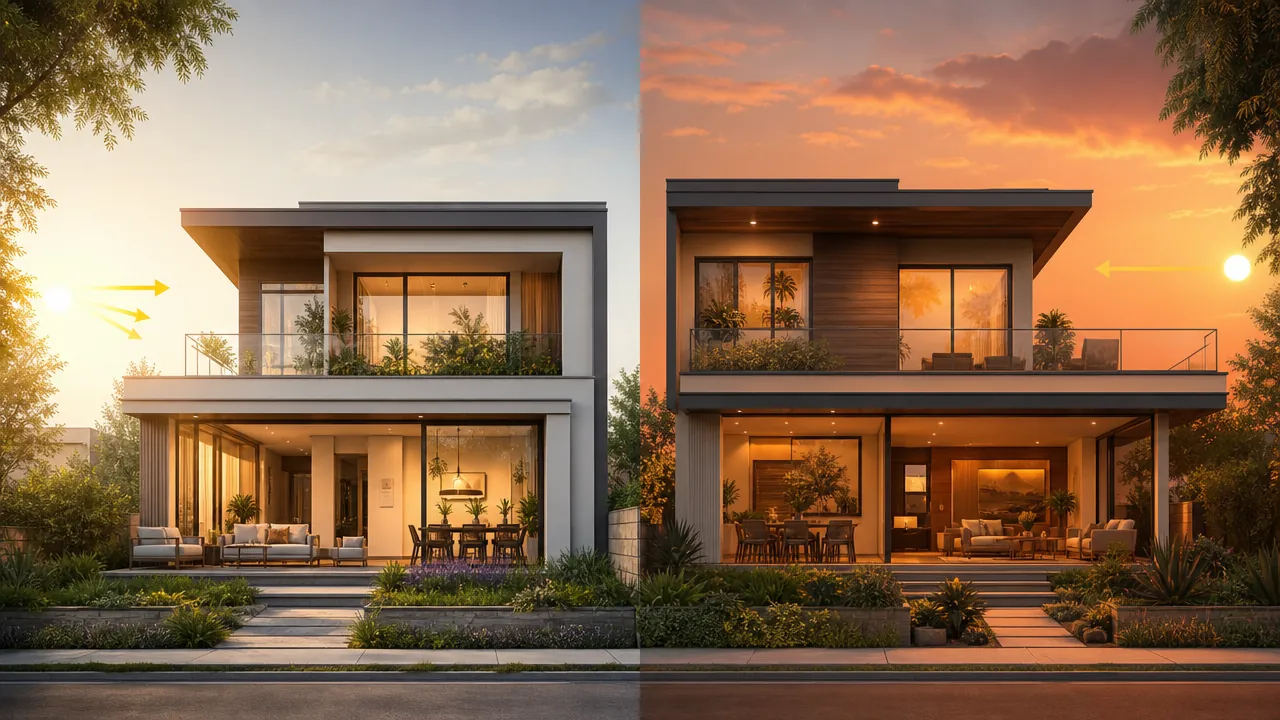
East-Facing or West-Facing Home? Choose the Right Orientation for Heat, Light and Livability
Choosing between an east-facing and west-facing home is not as simple as checking the direction of the front door. The more useful question is: Which direction do the main windows, living spaces and outdoor areas face?
An east-facing home typically receives direct morning sunlight, while a west-facing home gets stronger afternoon and evening exposure. That difference can affect indoor temperature, glare, energy use and how comfortable each room feels at the time you use it most.
The best choice depends on your climate, latitude, daily routine, room layout, window specifications, insulation and shading. Use this guide to compare an east facing vs west facing home based on how it will actually live—not just its compass label.
East vs. West Home Orientation: The Short Answer
For many households in hot or warm climates, an east-oriented home is often easier to keep comfortable because it receives sunlight earlier, before outdoor temperatures reach their daily peak. The home may feel cooler during the afternoon and evening, when many people are cooking, working or relaxing indoors.
A west-oriented home can be a strong choice if you value bright afternoon rooms, sunset views or warmth during cooler seasons. However, large west-facing windows need thoughtful shading and appropriate glazing because late-day sun can create glare and heat when the home is already warm.
| Priority | Usually the better starting point | What to verify |
|---|---|---|
| Cooler afternoons in a warm climate | East exposure | Window area, external shade and ventilation |
| Bright rooms after work | West exposure | Glare control and solar heat gain |
| Morning light for bedrooms or breakfast areas | East exposure | Blinds, curtains and nearby obstructions |
| Sunset views and evening entertaining | West exposure | Awnings, shutters, trees or solar screens |
| Lowest energy demand | Neither automatically | U-factor, solar heat gain coefficient, insulation and air sealing |
Why the direction of the main windows matters more than the front door
A front door facing east does not necessarily make a home meaningfully east-facing from a comfort perspective. If the living room, bedrooms and largest glass areas face west, those windows will control much of the afternoon heat and light.
During a viewing, identify the direction of:
- The largest windows and glass doors
- The living room and primary bedroom
- The kitchen and home office
- Balconies, patios and other outdoor living areas
- Windows on upper floors, which may receive more direct sun
How climate, latitude, layout and shading change the result
Sun angles and seasonal conditions vary by latitude, hemisphere and local climate. A west-facing room in a mild, cloudy location may behave very differently from one in a hot, sunny region. Trees, neighboring buildings, balconies and roof overhangs can also block or filter sunlight.
This is why the best house orientation for heat cannot be decided from direction alone. The building envelope—the combination of windows, walls, roof, insulation, shading and air sealing—may matter more than the broad east-versus-west label.
How an East-Facing Home Gets Light and Heat
Morning sunlight can brighten bedrooms, kitchens and breakfast areas
East-facing windows generally receive direct sunlight during the morning. This can make bedrooms, kitchens and breakfast areas feel bright at the start of the day without exposing them to the strongest late-afternoon sun.
For example, an east-facing kitchen may receive useful daylight from 7 a.m. to late morning. If your household starts early, that natural light can reduce the need for electric lighting and create a pleasant start to the day.
East-facing windows usually avoid the strongest late-afternoon heat
In many Northern Hemisphere climates, outdoor temperatures rise through the afternoon. Morning sunlight arrives when the air and building materials may still be relatively cool, while the same amount of late-day sunlight can enter when walls, roofs and rooms have already absorbed heat.
As a result, east-oriented glazing may be easier to manage in warm climates. Rooms can cool down during the afternoon rather than continuing to gain heat into the evening.
Morning glare and early light can still affect comfort
The advantages are not automatic. Low morning sun can cause glare on computer screens, televisions and glossy work surfaces. It may also wake light-sensitive sleepers earlier than desired.
Adjustable blinds, curtains or exterior screens can solve much of this problem. Also check whether neighboring buildings or trees block the morning light you expect to receive.
How a West-Facing Home Gets Light and Heat
Afternoon sunlight creates bright living spaces and sunset views
West-facing windows generally receive direct sunlight later in the day. This can suit households that spend most of their time at home after work or school. A west-facing living room may be naturally bright when the family gathers in the evening, and a west-facing balcony may offer attractive sunset views.
West-facing windows can increase glare and evening heat
The same exposure can make rooms uncomfortably bright or warm. Low-angle afternoon sun is difficult to block with a simple horizontal overhang, particularly when windows are tall or extend close to the floor.
Heat may remain indoors after sunset because floors, walls and furniture absorb solar energy during the afternoon. In a warm climate, that can increase reliance on air conditioning during the hours when the household is most active.
Large or poorly shaded windows need extra attention
A small west-facing window may have little practical effect. A wall of west-facing glass is a different matter. Ask whether the property has:
- Exterior awnings or adjustable shutters
- Deep balconies or roof overhangs
- Solar screens or shade structures
- Low-emissivity or solar-control glazing
- Insulated curtains or well-fitted blinds
- Trees positioned to provide seasonal shade
Exterior shading is particularly valuable because it stops much of the solar radiation before it reaches the glass.
East-Facing vs. West-Facing Home: Heat Comparison
Why west-facing solar heat gain is often harder to manage
Late-afternoon sun tends to arrive at a lower angle and can enter deep into a room. It may also coincide with high outdoor temperatures and peak household activity. These conditions make west-facing windows a common source of glare and overheating.
This does not mean every west-facing home is hot. A well-designed property with high-performance glazing, exterior shade, good insulation and effective ventilation can outperform a poorly built home with a more favorable orientation.
When an east-facing home may reduce cooling demand
An east-oriented home may have a practical advantage in hot climates when its main windows are modest in size and shaded after the morning. Cooler afternoons can reduce the length or intensity of air-conditioning cycles, especially in rooms used in the evening.
However, compare actual window areas rather than relying on direction. A heavily glazed east wall may admit more total heat than a compact, shaded west window.
Why east is not automatically better in every climate
In a cold climate, useful winter sunlight can help warm rooms. In a mild climate, afternoon light may be more important than avoiding heat. In the Southern Hemisphere, seasonal sun paths differ, so local conditions should guide the decision.
Treat orientation as one input in your evaluation—not a universal rule.
East-Facing Home Advantages and Drawbacks
Advantages of an east-facing home
- Comfortable morning light for early routines
- Often less late-afternoon heat in warm climates
- Good exposure for bedrooms, kitchens and breakfast spaces
- Potentially cooler living areas during evening hours
- Useful daylight without relying entirely on electric lighting in the morning
Potential drawbacks of an east-facing home
- Low morning sun can create glare
- Bedrooms may become bright earlier than expected
- Living rooms may need artificial lighting later in the day
- Morning exposure can be less valuable for households that wake late
- Trees or nearby buildings may eliminate much of the expected benefit
West-Facing Home Advantages and Drawbacks
Advantages of a west-facing home
- Bright afternoon and evening living spaces
- Attractive sunset views
- Good fit for households active after work
- Potentially useful winter warmth in some climates
- Strong daylight for late-day home offices, lounges and entertaining areas
Potential drawbacks of a west-facing home
- Greater risk of afternoon glare
- Higher indoor temperatures in warm, sunny climates
- Heat may persist into the evening
- Cooling costs can rise when windows are large or poorly shaded
- Furniture, flooring and artwork may experience more exposure to direct sunlight
A More Useful Decision Tool: Score the Home by Climate and Lifestyle
Instead of asking which direction is universally better, score each property from 1 to 5 in four categories:
- Heat risk: How much direct sun reaches the main rooms during the hottest part of the day?
- Schedule fit: Does the home receive light when you are actually using each room?
- Shade control: Can exterior or interior measures block unwanted sunlight?
- Envelope performance: Are the windows, insulation and air sealing suitable for the climate?
For example:
A west-facing apartment might score 5 for evening light, 2 for heat risk, 4 for shading and 5 for window performance. Its total could still make it a better choice than an east-facing home with poor insulation and unshaded glass.
You can also weight the categories. In a hot climate, give heat risk and shade control double importance. If sunset views are central to your lifestyle, give schedule fit and outlook more weight.
Which Orientation Is Better for Natural Light?
Choose east-facing exposure for morning-focused households
East exposure works well for people who exercise, prepare breakfast or work from home early. Bedrooms and kitchens can benefit from cheerful morning light, provided glare and early waking are manageable.
Choose west-facing exposure for afternoon and evening activity
West exposure may be more useful if the home is quiet during the morning but active after work. Living rooms, dining areas and entertainment spaces can feel brighter when they are occupied.
Window size, room depth and obstructions matter as much as direction
Natural light depends on more than compass direction. Consider:
- Window height and width
- Room depth and ceiling height
- Interior wall and floor colors
- Trees, buildings and balconies
- Glass transmission and tint
- Exterior shade throughout the year
A deep room with one small window may feel darker than a shallow room with a carefully shaded window facing the less preferred direction.
Which Orientation Is Better for Energy Efficiency?
Compare the following before deciding:
Solar heat gain coefficient and U-factor
The solar heat gain coefficient indicates how much solar heat a window allows indoors. A lower value can be useful where cooling is the main concern, particularly on heavily exposed glazing. The U-factor measures how readily heat passes through the window; lower values generally indicate better insulation.
Ask for the actual window performance specifications rather than accepting descriptions such as “energy efficient.” Low-emissivity coatings and suitable solar-control glass can improve comfort, but the ideal specification depends on climate and seasonal priorities.
Window area, insulation and air sealing
A home with fewer, better-performing windows may use less energy than one with extensive glass, regardless of orientation. Check the quality of wall and roof insulation, door seals, window frames and visible gaps around openings.
Exterior shading
Overhangs, awnings, shutters, solar screens and well-placed landscaping can reduce solar heat before it enters the home. Interior curtains help control glare and can slow heat transfer, but they usually cannot block sunlight as effectively as exterior shading.
Best Orientation for Bedrooms, Living Rooms and Other Spaces
Bedrooms and nurseries
East-facing bedrooms offer morning light but may need blackout shades for light-sensitive sleepers. West-facing bedrooms can become warm in the evening, particularly on upper floors or behind large windows. Visit at bedtime or ask how the room feels after a hot day.
Living rooms and entertaining spaces
Choose based on when the room is occupied. A morning-use lounge may benefit from east exposure. A family room used after dinner may be more enjoyable with west light—but only if glare and heat can be controlled.
Kitchens, home offices and outdoor areas
An east-facing kitchen can be comfortable during breakfast preparation. A west-facing home office may provide useful late-day light but can make screens difficult to read. For patios and balconies, evaluate shade, wind and privacy as well as sunlight.
How to Make an East-Facing Home More Comfortable
- Install adjustable blinds or shades for morning glare.
- Use blackout treatments in bedrooms if early light is disruptive.
- Add layered lighting for darker afternoons and evenings.
- Check whether trees or buildings will block useful daylight.
- Position desks and screens perpendicular to windows where possible.
How to Make a West-Facing Home More Comfortable
- Prioritize exterior overhangs, awnings, shutters or solar screens.
- Consider low-emissivity or solar-control glazing when replacing windows.
- Use insulated curtains that close before peak afternoon sun.
- Plant suitable deciduous trees where local conditions allow seasonal shade.
- Combine shading with insulation and air sealing rather than relying on window treatments alone.
- Place seating and screens away from direct sunset glare.
Home Viewing Checklist for East- and West-Facing Properties
Use this checklist when comparing properties:
- Visit once in the morning and again in the late afternoon.
- Use a compass app or site plan to identify each major window’s direction.
- Check the living room, bedrooms, kitchen and office—not just the entrance.
- Look for exterior overhangs, balconies, awnings, shutters and solar screens.
- Note trees, neighboring buildings and possible future construction.
- Ask for window labels or specifications, including U-factor and solar heat gain coefficient.
- Look for signs of overheating, such as faded flooring, damaged blinds or portable cooling equipment.
- Ask to review recent electricity and heating bills where available.
- Check whether outdoor areas are usable at the times your household needs them.
- Consider the property’s performance on a hot or cold day, not only during pleasant weather.
How Climate and Hemisphere Affect the Decision
Hot climates often make west-facing heat more challenging
In hot, sunny regions, late-day solar gain can increase indoor temperatures and cooling demand. East exposure is often easier to manage, especially when morning windows have adjustable shade and the main living spaces face away from the strongest afternoon sun.
Cold climates may benefit from carefully managed solar gains
In colder regions, direct sunlight can provide useful passive warmth during some seasons. The goal is not to reject all solar gain but to control it. Glazing, thermal mass, insulation and seasonal shading should work together.
Use local sun paths and site conditions instead of universal rules
Latitude, season, cloud cover, humidity, wind and surrounding structures all influence performance. A local designer, energy assessor or experienced building professional can help evaluate the property’s actual exposure if the decision is close.
Final Verdict: Is an East- or West-Facing Home Better?
For many buyers in hot climates, an east-facing home is the safer starting point for comfort because morning sunlight is often easier to manage than strong afternoon exposure. It can offer bright mornings and cooler evenings, particularly when the main windows are well shaded.
A west-facing home can be the better choice when your household values afternoon light, sunset views or evening activity—and when the property has effective exterior shading, suitable glazing and a strong building envelope.
The final answer to east facing vs west facing home is therefore practical rather than absolute: choose the home whose windows, rooms, climate response and daily schedule work together. Before making an offer, compare both properties using the scoring method above, visit at different times and request window specifications and recent energy bills. The right home is the one that feels comfortable when you use it—not merely the one with the preferred compass direction.
Frequently Asked Questions
Is an east-facing home better than a west-facing home?
Not always. East exposure is often easier to keep cool in hot climates, while west exposure can provide better afternoon light and views. Window size, glazing, insulation, shading and room layout may outweigh the direction itself.
Which home orientation is best for avoiding heat?
In many warm climates, east-facing main windows are easier to manage because they receive sunlight earlier in the day. However, a shaded and energy-efficient west-facing home may perform better than an unshaded east-facing property.
Are west-facing windows always a problem?
No. They can create glare and heat when large or poorly shaded, but exterior awnings, shutters, solar screens, trees and solar-control glazing can significantly improve comfort.
Which direction is best for natural light?
East-facing windows are generally best for morning light, while west-facing windows are better for afternoon and evening brightness. Room depth, window size, glass type and obstructions also influence daylight quality.
Should bedrooms face east or west?
East-facing bedrooms can provide pleasant morning light but may wake sleepers early. West-facing bedrooms may stay warmer in the evening. Choose based on sleeping habits, climate and the quality of available shades.
What should I inspect besides the direction of the front door?
Inspect the direction and size of every major window, the outdoor areas, shading devices, nearby buildings and trees. Also ask for window specifications and recent energy bills.
Can window treatments fix a west-facing room?
They can help, but exterior shading is usually more effective because it blocks sunlight before it passes through the glass. Combine exterior measures with insulated curtains, efficient glazing and good insulation for stronger results.