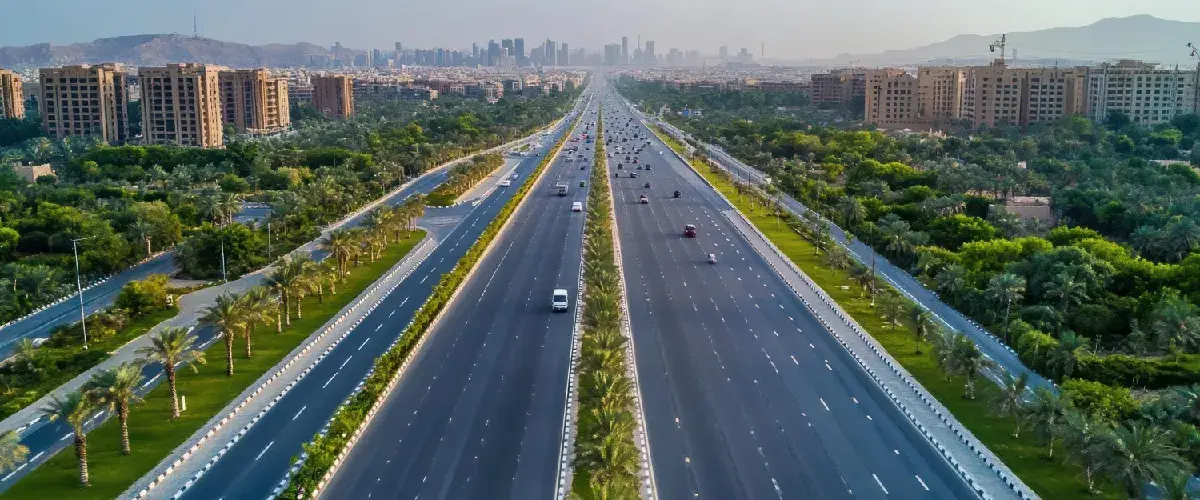
Infrastructure has always been the most reliable predictor of real estate value in Mumbai. From the Sea Link's transformation of the western corridor to the metro network's impact on Andheri and Ghatkopar, the pattern is consistent: when the city invests in connectivity, property markets follow. Eastern Freeway Phase 2 is the next major chapter in that story — and the Dadar-Wadala corridor is positioned to be its primary beneficiary.
The Eastern Freeway in its current form already represents one of Mumbai's most significant road infrastructure achievements. The existing stretch from P. D'Mello Road to Ghatkopar brought meaningful relief to the city's eastern commuters and demonstrated the transformative potential of high-capacity elevated expressways. Phase 2 extends that logic further, deepening connectivity between South Mumbai, the eastern suburbs, and the dense residential and commercial fabric in between.
For Dadar and Wadala — two neighbourhoods that sit squarely in the path of this expanded connectivity — the implications are substantial. Both areas already have strong fundamentals: rail access, social infrastructure, cultural identity, and established residential demand. What they have lacked is the kind of marquee infrastructure narrative that draws premium developer attention and high-net-worth buyer interest at scale. Eastern Freeway Phase 2 provides exactly that.
Enhanced connectivity and what it means for commuters
The Phase 2 extension is designed to significantly reduce travel time between South Mumbai and the eastern and northeastern parts of the city. For residents of Dadar and Wadala, the most immediate benefit will be faster, more predictable access to employment hubs that are currently separated by congested surface roads. Destinations such as Ghatkopar, Vikhroli, and Powai — home to major corporate campuses and technology parks — will become meaningfully more accessible, expanding the effective catchment of professionals who consider this corridor for their homes.
The impact on daily commuting quality should not be underestimated. Mumbai's professionals consistently rank commute time and reliability among their top priorities when choosing where to live. A reduction of even fifteen to twenty minutes in daily travel time, compounded across a working week, represents a genuine quality-of-life improvement that buyers are willing to pay for. As Eastern Freeway Phase 2 delivers this improvement to the Dadar-Wadala corridor, demand from the professional segment will strengthen accordingly.
The freeway extension also improves the corridor's connections to the port and logistics zone, supporting commercial activity that in turn drives residential demand from workers and executives in those sectors. The infrastructure investment is not just a road — it is a catalyst for a broader economic ecosystem that will sustain residential demand across multiple buyer and tenant profiles for years to come.
Strategic location with urban advantage
Dadar and Wadala are not emerging neighbourhoods waiting to be discovered — they are established, well-serviced urban localities with deep roots in Mumbai's social and commercial fabric. Dadar's position at the junction of the Western and Central Railway lines makes it one of the city's most connected residential addresses. Wadala, adjacent to the Eastern Freeway and close to the proposed monorail extension and BKC, sits at a different but equally powerful node in Mumbai's transport network.
Both neighbourhoods benefit from comprehensive social infrastructure — reputable schools, hospitals, retail markets, recreational spaces, and cultural institutions that have served their communities for generations. Shivaji Park in Dadar and the open waterfront areas near Wadala provide access to green space and visual relief that is increasingly scarce in Mumbai's densifying urban core. These amenities are not replicable in newly developed peripheral locations and represent a significant liveability advantage for residents.
The combination of established social infrastructure and improving transport connectivity creates a profile that is particularly attractive to family buyers — a demographic that values both daily convenience and long-term stability. As Eastern Freeway Phase 2 strengthens the corridor's accessibility, it will draw this buyer segment in greater numbers, supporting sustained demand for larger premium configurations that serve family living well.
The rise of modern premium housing
Developer attention tends to follow infrastructure, and the Dadar-Wadala corridor is already seeing increased activity from premium residential developers who recognise the value being unlocked by improved connectivity. Projects that would have been difficult to position at premium price points before the freeway expansion are now attracting serious buyer interest, and developers are responding with product quality that matches the aspirations of the incoming demographic.
Modern premium developments in the corridor are offering amenity packages that reflect what today's discerning buyers expect: fully equipped fitness centres, swimming pools, landscaped podiums, children's activity zones, co-working spaces, EV charging infrastructure, and smart home technology as standard. For families seeking 3 and 4 BHK apartments in Wadala, these projects represent a genuine upgrade — larger homes, better-designed spaces, and community environments that support both daily living and long-term wellbeing.
Crucially, these premium developments are available at price points that compare favourably with equivalent products in Bandra, Worli, or Lower Parel. The Dadar-Wadala corridor has not yet been fully re-rated to reflect its improving fundamentals, which means buyers entering the market now are capturing the appreciation potential ahead of the broader re-pricing that infrastructure projects of this scale consistently deliver.
Investment fundamentals and price appreciation outlook
For property investors, the Eastern Freeway Phase 2 story follows a well-established Mumbai pattern. Infrastructure announcements and construction progress create a window of opportunity — a period during which values are rising but have not yet reached the premium that full operational status will command. Buyers who move during this window consistently outperform those who wait for the infrastructure to be completed and the premium to be fully priced in.
Wadala in particular has strong investment credentials beyond the freeway narrative. The neighbourhood's proximity to BKC — accessible via the Eastern Freeway and the proposed metro extension — positions it as a natural residential overflow zone for professionals working in one of India's most significant business districts. As BKC continues to attract corporate occupiers and the workforce it generates seeks residential options, Wadala's combination of relative affordability and strong connectivity will draw sustained tenant demand that supports healthy rental yields.
Long-term capital appreciation in the corridor is supported by the same scarcity dynamics that drive value across Mumbai's established micro-markets. Land in Dadar and Wadala is finite, replacement cost is rising, and the stock of genuinely well-connected premium residential inventory remains limited relative to demand. As Phase 2 delivers its connectivity premium and the broader re-rating of the corridor accelerates, investors who have established positions early will benefit from appreciation that reflects both improving fundamentals and the natural scarcity of well-located Mumbai real estate.
Sustainability and the evolving residential standard
The premium developments emerging in the Dadar-Wadala corridor are being built to a higher environmental and design standard than the existing housing stock they are replacing. Green building certifications, energy-efficient systems, rainwater harvesting, and integrated waste management are becoming standard features in new projects — reflecting both regulatory requirements and the genuine preferences of an increasingly sustainability-conscious buyer pool.
For buyers who place value on the long-term environmental and operating cost profile of their home, these credentials matter. Buildings that carry green certifications tend to command a rental and resale premium, attract higher-quality tenants, and retain their value more effectively as older, less efficient stock depreciates. Investing in a certified premium development in the Dadar-Wadala corridor today is therefore not just a lifestyle choice — it is a financially sound decision with implications for returns over a decade-long holding period.
The improving public environment in the corridor — better roads, reduced congestion, and the open space access that both neighbourhoods offer — adds further to the sustainability and liveability narrative. As Mumbai's buyers become more sophisticated in their evaluation of residential options, the ability to point to a genuinely improving physical environment will be an increasingly significant factor in purchase decisions.
Who is buying in the Dadar-Wadala corridor today
The buyer profile emerging in the Dadar-Wadala corridor reflects the infrastructure story taking shape around it. Senior professionals working in BKC, Lower Parel, or South Mumbai are finding that the corridor offers them proximity to work without the price premium of Bandra or Worli. Families upgrading from older housing stock in the area are choosing new premium developments that offer the space, amenities, and design quality their previous homes could not provide.
NRI buyers are also taking note. The corridor's improving connectivity, combined with the cultural familiarity that both Dadar and Wadala hold for Mumbai's diaspora, makes it an attractive destination for buyers seeking a premium Mumbai address at a price point below the city's most established luxury markets. For NRI investors in particular, the combination of rental yield potential and capital appreciation prospects in an infrastructure-driven growth corridor is a compelling proposition.
End-users and investors are arriving at the same conclusion through different routes — and that convergence of demand from multiple buyer types is precisely the dynamic that sustains residential market momentum over the long term. When a neighbourhood attracts genuine owner-occupier demand alongside investment interest, the foundations for sustained appreciation are firmly in place.
Summary
Eastern Freeway Phase 2 is not simply a road project. It is a structural upgrade to the economic and residential geography of the Dadar-Wadala corridor — one that will improve daily commuting, attract premium development, broaden the buyer base, and drive sustained appreciation in a part of Mumbai that has long deserved greater recognition.
For homebuyers, the corridor offers a rare combination: established neighbourhood character, comprehensive social infrastructure, improving connectivity, and premium residential product at price points that still reflect upside potential. For investors, it offers entry into an infrastructure-driven appreciation cycle at a stage where the fundamentals are clear but the full re-rating has not yet occurred. In Mumbai's competitive real estate market, opportunities of this quality and clarity are worth acting on decisively.