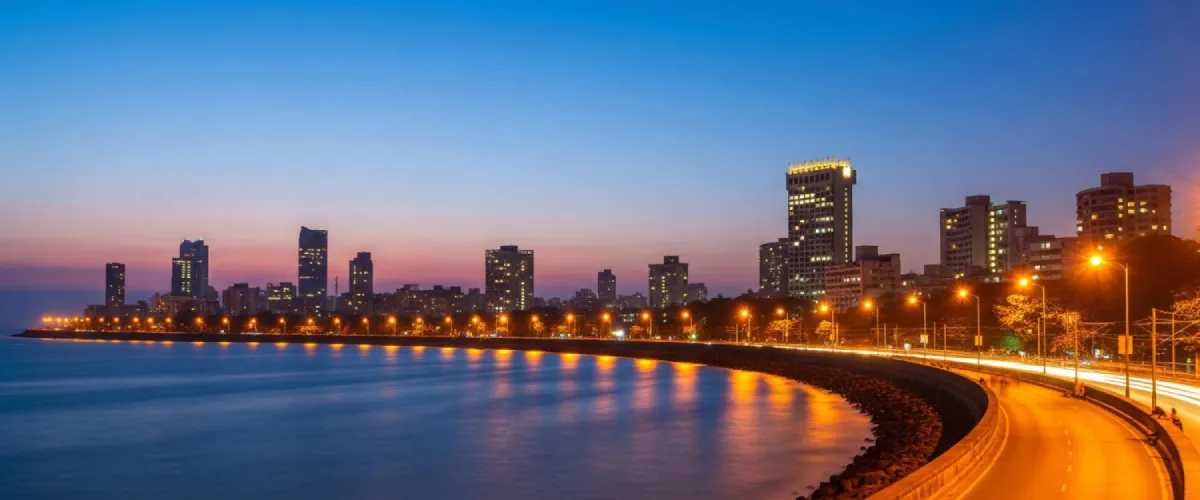
Mumbai's real estate market has always rewarded those who identify value before it is widely recognised. The city's most celebrated premium addresses — Bandra, Worli, Lower Parel — were once overlooked neighbourhoods that infrastructure, developer interest, and demographic shifts gradually elevated into the top tier of residential desirability. Today, that same process is underway in a new generation of micro-markets, and the window to enter ahead of the curve is open right now.
The forces driving this shift are structural, not speculative. A decade of sustained infrastructure investment — metro expansion, coastal road development, freeway extensions, and station redevelopment — has compressed commute times and extended the geography of convenient urban living. Meanwhile, a post-pandemic recalibration of what buyers want from their homes has pushed demand toward larger, better-designed residences with meaningful amenity ecosystems, regardless of whether they sit in a historically premium postcode.
The result is a new luxury corridor taking shape across Mumbai's mid-city belt — a band of neighbourhoods that combine established urban character with improving connectivity, rising developer quality, and price points that still reflect significant upside. Understanding which micro-markets within this corridor offer the strongest fundamentals is the essential question for buyers and investors navigating the market in 2025 and 2026.
Why Mumbai micro-markets matter now
The logic of Mumbai micro-market investing has always rested on scarcity. Land in the city's established premium zones is finite, and the cost of acquiring and developing it has risen to levels that compress returns for all but the most capitalised developers. This constraint is pushing serious real estate activity into adjacent and emerging neighbourhoods — areas with genuine urban credentials that have not yet been fully re-rated by the market.
Infrastructure is the critical accelerant in this process. Every new metro line, freeway extension, or coastal road project effectively redraws the map of where professionals can live comfortably relative to where they work. Neighbourhoods that were once considered inconveniently located become viable. Those that were already accessible become highly desirable. And those that sit at infrastructure crossroads — connected in multiple directions to multiple employment centres — become the most sought-after addresses in the city.
Buyer sophistication has also increased materially. Today's premium homebuyer in Mumbai is not simply seeking a prestigious postcode — they are conducting genuine due diligence on infrastructure timelines, developer track records, construction quality, amenity completeness, and long-term appreciation potential. This more analytical buyer is drawn to micro-markets where the fundamental story is clear and the entry point has not yet fully reflected it. That dynamic is precisely what characterises Mumbai's emerging luxury corridor in 2025 and 2026.
Dadar: cultural capital meets modern premium living
Dadar occupies a position in Mumbai that no other neighbourhood can replicate. It sits at the geographical centre of the city, served by the Western Line, Central Line, and Harbour Line — giving residents multi-directional rail access that makes virtually every part of Mumbai commutable without a car. Add improved road connectivity via the Bandra-Worli Sea Link corridor and the Eastern Freeway, and Dadar's transport credentials are genuinely exceptional by any measure.
What has changed in recent years is the quality of residential product available in the neighbourhood. A sustained wave of redevelopment — replacing ageing chawls and low-rise structures with modern high-rises — has introduced a new generation of premium apartments to Dadar's housing stock. These developments bring with them the full suite of contemporary amenities that discerning buyers expect: landscaped podiums, fully equipped fitness centres, co-working lounges, children's activity zones, and smart home integration.
The cultural dimension of Dadar's appeal should not be underestimated. Shivaji Park, one of Mumbai's most iconic open spaces, anchors the neighbourhood with green space and community life that newer developments in peripheral locations cannot manufacture. The area's Maharashtrian heritage, its vibrant markets, and its genuine urban energy give it a distinctive identity that resonates with buyers seeking a neighbourhood with real character. For premium buyers who want connectivity, quality, and a sense of place, Dadar delivers all three — and its pricing still reflects the opportunity for meaningful appreciation as the market continues to re-rate it.
Wadala: infrastructure-led transformation at scale
Wadala's evolution over the past decade has been one of Mumbai's most significant real estate stories, and the next chapter promises to be even more compelling. The neighbourhood's proximity to BKC — India's most important business district — combined with improving metro and road connectivity, has repositioned it from a mid-city area of limited premium appeal to a genuine destination for buyers and investors who understand where the fundamentals are pointing.
The Eastern Freeway, already operational through its existing stretch, is being extended further in Phase 2 — a development that will strengthen Wadala's connections to both South Mumbai and the eastern suburbs, creating a multi-directional connectivity profile that few mid-city neighbourhoods can match. The proposed metro extension adds another layer to this transport story, placing Wadala within comfortable reach of the city's dispersed employment hubs without the congestion of surface roads.
Developer response to Wadala's improving fundamentals has been rapid. Premium residential projects offering 3 and 4 BHK configurations with world-class amenity packages are coming to market at price points that remain significantly below comparable products in Bandra or Lower Parel. For investors, this gap represents both current value and future appreciation potential — as infrastructure delivers, as the neighbourhood's profile rises, and as the premium commanded by Wadala's address converges toward that of its better-established neighbours.
Bigger homes and better-designed spaces
The shift in what Mumbai's premium buyers want from their homes is one of the most consequential demand-side trends shaping the market in 2025 and 2026. Remote and hybrid working has made the home a more complex, multi-functional environment — one that needs to accommodate focused work, family life, physical wellness, and social hosting without compromising on any front. The compact apartments that defined aspirational living for a previous generation of Mumbai buyers simply cannot serve these needs.
Three-bedroom apartments have become the new benchmark for premium family living, offering dedicated workspaces, comfortable accommodation for family members, and enough room for the kind of daily life that genuinely supports wellbeing. Four-bedroom configurations are attracting senior professionals, larger families, and investors targeting the high-end rental market — a segment where demand consistently outstrips supply in well-located Mumbai buildings.
Developers in Mumbai's emerging luxury corridor have responded with projects that prioritise spatial quality alongside scale. Thoughtful layout design, high ceilings, maximised natural light, integrated storage, and premium material finishes are increasingly standard in the top tier of new residential product. Combined with amenity ecosystems that bring fitness, leisure, and community life within the building, these projects offer a quality of daily living that justifies premium pricing and supports long-term value retention.
What buyers want from luxury living in 2025
The luxury homebuyer in Mumbai today is more informed, more demanding, and more globally benchmarked than at any previous point in the city's real estate history. They have visibility into international residential standards, and they are applying those standards to their evaluation of Mumbai developments. Meeting this bar requires developers to think beyond square footage and surface finishes — to the totality of the living experience they are creating.
Connectivity — both physical and digital — is a non-negotiable. Premium buyers expect proximity to transport infrastructure, and they expect their buildings to be equipped with high-speed fibre networks, smart building management systems, and EV charging as standard. Security, building management quality, and maintenance standards are evaluated rigorously, as buyers understand that these factors directly affect both quality of life and long-term asset value.
Sustainability credentials have moved from desirable to expected in the top tier of the market. Green building certifications, energy-efficient systems, water recycling infrastructure, and access to natural light and green space are all factored into purchase decisions by a buyer cohort that is conscious of its environmental footprint and understands that sustainable buildings hold their value better over time. Developers who have invested in these credentials are seeing it reflected in sales velocity and pricing power.
How this benefits investors and families equally
One of the most compelling features of Mumbai's emerging luxury corridor is that it serves the interests of owner-occupiers and investors with equal strength — a combination that is rarer than it might appear and that is a strong indicator of sustainable market momentum. When genuine end-user demand and investment interest converge in the same locations, the result is a more stable, more liquid market with better long-term appreciation characteristics.
For families, the corridor's micro-markets offer something genuinely valuable: premium homes in urban neighbourhoods with established social infrastructure — schools, hospitals, parks, markets — that peripheral luxury developments simply cannot provide. The ability to live well without sacrificing access to the city's fabric is increasingly what distinguishes a truly excellent residential address from a merely expensive one.
For investors, the arithmetic is compelling. Entry prices in Dadar and Wadala remain below those of comparable products in Bandra, Worli, or Lower Parel — but the gap is narrowing as infrastructure delivers and developer quality improves. Rental yields in the corridor are supported by strong underlying demand from professionals, families, and the NRI segment. And the long-term capital appreciation case is anchored in the same scarcity, connectivity, and quality dynamics that have driven value in Mumbai's established premium markets for decades.
The NRI and global investor perspective
Mumbai's emerging luxury corridor is attracting growing interest from the NRI community and globally oriented investors who are taking a longer view of India's urban real estate story. For diaspora buyers in particular, the micro-markets of Dadar and Wadala carry both emotional resonance — as culturally familiar, deeply Mumbai neighbourhoods — and financial logic, as undervalued locations in a city with a proven track record of premium residential appreciation.
The improving regulatory environment under RERA, combined with greater transparency in project documentation and delivery timelines, has lowered the risk profile of Indian real estate investment for overseas buyers. NRIs who purchase in Mumbai's emerging luxury corridor today are entering a more accountable, better-regulated market than existed even five years ago — and they are doing so at price points that reflect the upside still available as these micro-markets continue to mature.
Currency dynamics add further appeal for NRI buyers. The relative strength of dollar, pound, or dirham earnings against the rupee means that premium Mumbai apartments represent genuine value when evaluated in the context of global property markets. A well-located 3 or 4 BHK apartment in Dadar or Wadala, purchased today, offers a combination of yield, appreciation potential, and lifestyle value that is difficult to match in comparable gateway cities internationally.
Summary
Mumbai's luxury corridor is not a future possibility — it is a present reality taking shape across a belt of micro-markets that combine established urban character, improving infrastructure, rising developer quality, and price points that still reflect meaningful appreciation potential. Dadar and Wadala are at the forefront of this shift, each offering a distinct but equally compelling case for buyers and investors who are thinking seriously about where Mumbai's premium residential market is heading.
The window to enter these markets ahead of full re-rating remains open, but it will not stay open indefinitely. As infrastructure completes, as developer pipelines deliver, and as buyer awareness of these locations grows, the gap between current pricing and long-term value will close. Those who act on the fundamentals now — rather than waiting for the story to be universally acknowledged — will capture the returns that reward early, well-informed conviction in Mumbai real estate.