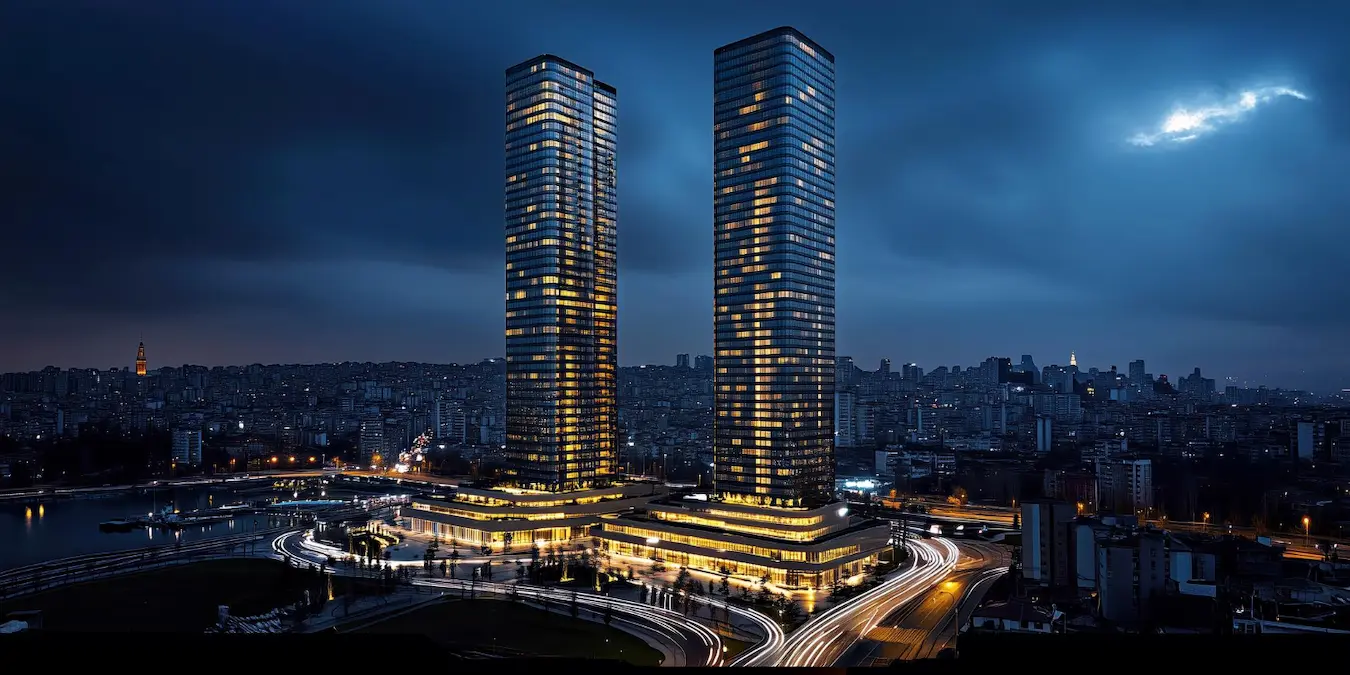
Dadar occupies a unique position in Mumbai's story. For decades it was the city's beating heart — a dense, energetic neighbourhood where old chawls stood beside flower markets, where Maharashtrian culture ran deep and the railway junction connected half the city. It was functional, familiar, and unmistakably Mumbai.
Today, that character remains, but something new is layered on top of it. Dadar is in the middle of a quiet but significant transformation — one driven by infrastructure upgrades, a new generation of residential developments, and a growing appetite among Mumbai's professional class for well-located homes that don't require a trade-off between convenience and quality of life.
For homebuyers and investors paying attention, Dadar represents one of the city's most compelling opportunities right now — a neighbourhood at the inflection point between its established identity and a premium future.
Strategic location and connectivity
Dadar's greatest and most enduring asset is its location. Sitting at the geographical centre of Mumbai, it offers something no peripheral neighbourhood can replicate: equal access to almost everywhere. The Western and Central Railway lines converge here, making Dadar one of the most connected rail junctions in the country. A commuter can reach Churchgate in under 20 minutes, Bandra in 15, or CST in the same time — without a car, without traffic, and on a reliable schedule.
Road connectivity is equally strong. The Eastern and Western Express Highways are accessible within minutes, and the Bandra-Worli Sea Link is a short drive away, opening up South Mumbai's commercial districts. For professionals working across the city's dispersed business hubs — Nariman Point, BKC, Lower Parel, or Powai — Dadar offers a central base that minimises commute time from every direction.
This connectivity premium is not just a quality-of-life advantage — it is a financial one. Properties in well-connected locations consistently outperform in both capital appreciation and rental demand, and Dadar's central position makes it structurally resistant to the kind of demand erosion that can affect peripheral markets when economic cycles shift.
Upgraded infrastructure and modern residential development
The most visible sign of Dadar's evolution is the pace of residential redevelopment. Ageing chawls and low-rise structures are being replaced by modern high-rises with contemporary architecture, larger floor plates, and amenity packages that match what buyers now expect from premium housing. Developers who previously focused exclusively on South Mumbai or the western suburbs have begun acquiring land parcels in Dadar, recognising its potential as an undervalued micro-market.
New projects in Dadar now routinely offer landscaped podiums, fully equipped gymnasiums, children's play areas, multipurpose clubhouses, and covered parking — features that were largely absent from the neighbourhood's housing stock a decade ago. The shift signals a broader repositioning of the area in the minds of both developers and buyers.
Public infrastructure has kept pace as well. Road widening projects, improved street lighting, upgraded drainage systems, and the ongoing development of the coastal road have collectively raised the neighbourhood's liveability quotient. The physical environment is cleaner, better managed, and more appealing to a demographic that values both connectivity and comfort.
Emergence of lifestyle and leisure options
Premium residential markets don't develop in isolation — they require a supporting ecosystem of retail, dining, wellness, and cultural experiences. Dadar is building that ecosystem rapidly. The neighbourhood has seen a noticeable rise in speciality cafes, contemporary restaurants, boutique fitness studios, and curated retail stores that cater to a more discerning local population.
Shivaji Park, one of Mumbai's most iconic open spaces, remains a defining feature of the neighbourhood — offering residents access to green space, morning walks, and community events in a city where such luxuries are increasingly rare. The park anchors the western edge of Dadar with a sense of openness that directly enhances the appeal of apartments in its vicinity.
Cultural institutions, art spaces, and educational establishments add further depth to the neighbourhood's profile. Dadar has long been a hub for Marathi theatre and cultural activity, and that heritage gives it a distinct identity that resonates with buyers seeking a neighbourhood with genuine character — not just a collection of towers and malls.
Real estate market trends and investment outlook
Property values in Dadar have risen steadily over the past several years, driven by a combination of constrained supply, strong underlying demand, and growing developer interest. While prices remain lower than comparable properties in Bandra, Worli, or South Mumbai, the gap has been narrowing — and that convergence represents a significant opportunity for investors entering the market now.
Rental demand in Dadar is robust and diversifying. The neighbourhood's connectivity makes it attractive to corporate professionals, while its cultural identity draws families with long ties to the area who are upgrading from older housing stock. The result is a tenant base that is stable, financially capable, and unlikely to be drawn away by competing micro-markets. Larger configurations — 3 BHK and 4 BHK flats in Dadar — are particularly sought after by families and senior professionals who need space without sacrificing central location.
From an investment perspective, Dadar exhibits the characteristics most associated with sustained appreciation: limited land availability, rising replacement costs, improving physical environment, and expanding demand from multiple buyer segments. These fundamentals support a positive long-term outlook for both capital growth and rental yield.
Redevelopment momentum and future supply
Much of Dadar's transformation is being driven by cluster redevelopment and the replacement of dilapidated housing societies with modern towers. The Maharashtra government's push for urban renewal has accelerated this process, with redevelopment schemes offering existing residents upgraded homes while unlocking new saleable inventory for developers.
This pipeline of redevelopment activity means that Dadar's residential landscape will continue to modernise over the coming decade. As older buildings are replaced with contemporary developments, the overall quality of the neighbourhood's housing stock will rise — pulling values upward across the micro-market, not just in individual projects.
For buyers considering a purchase in Dadar today, this trajectory is significant. Entering the market during the early stages of a redevelopment cycle — before the transformation is fully priced in — has historically been one of the most reliable ways to capture outsized appreciation in Mumbai real estate.
Who is buying in Dadar today
The buyer profile in Dadar has shifted noticeably over the past few years. Alongside the established Maharashtrian families who have always called the neighbourhood home, a new wave of buyers is arriving: young professionals who want a central location without the price tags of Bandra or Worli; families upgrading from cramped older apartments to spacious new developments; and investors who recognise value in a market that is improving but not yet fully re-rated.
NRI buyers are also showing growing interest in Dadar, attracted by its cultural familiarity, central address, and the availability of well-priced premium units from reputable developers. For the diaspora, a home in Dadar carries both emotional resonance and financial logic — a combination that drives confident purchasing decisions.
This broadening buyer base is itself a positive signal for the market. Neighbourhoods that attract diverse demand — across age groups, income levels, and buyer motivations — tend to be more resilient and appreciate more consistently than those dependent on a single buyer type.
Summary
Dadar's evolution into a premium residential hub is not a sudden development — it is the result of sustained investment in infrastructure, a generational shift in buyer preferences, and the natural appreciation of a neighbourhood that was always strategically located but undervalued relative to its fundamentals.
For homebuyers, it offers the rare combination of genuine connectivity, improving liveability, and a neighbourhood identity that newer developments in peripheral locations cannot manufacture. For investors, it offers entry into a market that is still in the process of being re-rated — with the underlying drivers of appreciation firmly in place. Dadar is no longer just a transit point. It is becoming one of Mumbai's most desirable addresses.