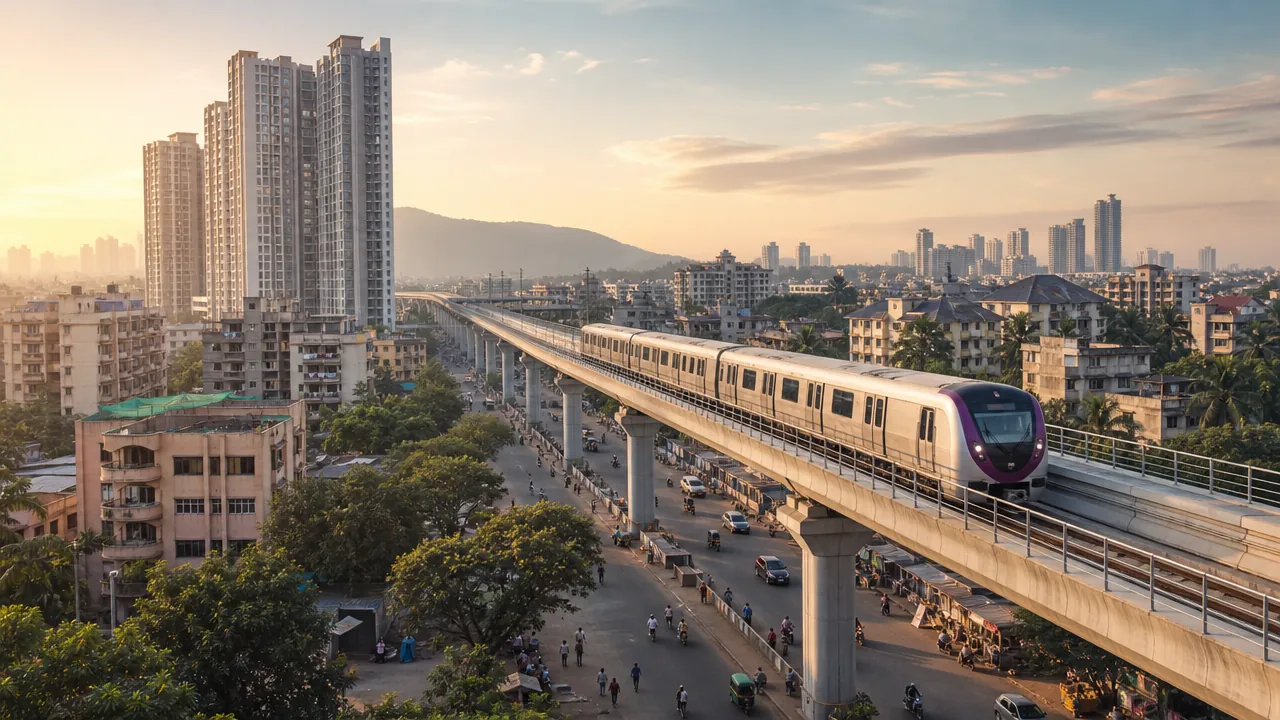
Mumbai Metro Line 9 Phase 2 Nears Commissioning: What It Means for Property Along the Dahisar–Mira Road Corridor
Mumbai Metro Line 9 Phase 2 is drawing attention from commuters, homebuyers and property investors as testing and systems-integration work moves the extension closer to commissioning. The proposed stretch is expected to extend the existing corridor from Kashigaon towards Bhayandar, improving access across parts of the Dahisar–Mira Road–Bhayandar belt.
However, an important distinction remains: progress towards commissioning is not the same as a confirmed passenger-service opening. Testing, safety clearances, inspections, trial operations and formal commissioning procedures still determine when the public service can begin. Until the authorities announce a confirmed opening schedule, buyers should treat the project as an emerging connectivity catalyst rather than a guaranteed property-price trigger.
Key takeaway: The strongest property opportunities are likely to be selective—homes with practical station access, reliable feeder connectivity, sound construction and genuine commuting utility may benefit more than properties that are merely located somewhere in the wider corridor.
Why Mumbai Metro Line 9 Phase 2 Is Drawing Attention Before Its Opening
A testing block signals progress, but the opening date still depends on approvals
The Mumbai Metropolitan Region Development Authority’s recent update, titled “Metro Line 9 Phase 2 nears commissioning: special morning block,” describes a special testing and integration block for the project. This is a meaningful project milestone because it indicates that railway systems and operating procedures are being tested together rather than being considered only as separate construction packages.
The update should still be read carefully. A testing block does not, by itself, establish a final Mumbai Metro Line 9 Phase 2 opening date. Passenger operations generally require the completion of testing, statutory inspections, safety authorisations and commissioning steps. The latest official announcement should therefore be checked before a purchase decision or a commute plan is based on the extension.
The update’s publication date and the latest official schedule should also be verified at the time of publication. Project timelines can change as testing and approvals progress.
What commissioning means for commuters, homebuyers and investors
For commuters, commissioning could create a more predictable rail-based route between Bhayandar, Mira Road and the wider western-suburban metro network. For homebuyers, it may increase the practical value of neighbourhoods that currently depend heavily on roads, buses, autos and the suburban railway.
For investors, the opportunity is more nuanced. Metro access can support tenant interest, improve the appeal of resale homes and encourage commercial activity around stations. It cannot, on its own, guarantee capital appreciation. Property performance will still depend on price, location, building quality, civic conditions, supply and the actual convenience of reaching a station.
What Mumbai Metro Line 9 Phase 2 Will Cover
The extension from Kashigaon towards Bhayandar
The operational portion of the corridor is generally identified as the Dahisar East–Kashigaon section. Phase 2 refers to the remaining extension from Kashigaon towards Bhayandar. Buyers should distinguish between these two portions when assessing current connectivity.
The existing section’s operational status and the Phase 2 commissioning status should be verified against the latest official MMRDA update. In particular, a project announcement about testing should not be interpreted as confirmation that the entire Dahisar East–Bhayandar route is already open to passengers.
Planned Metro Line 9 stations serving Mira Road and Bhayandar
The planned Phase 2 station areas identified in the project information include:
- Sai Baba Nagar
- Medetiya Nagar
- Shahid Bhagat Singh Garden
- Subhash Chandra Bose Stadium/Bhayandar West
These names identify planned station locations and should not automatically be treated as evidence that every station is open, fully accessible or operating on the same schedule. Station entrances, approach roads, interchange arrangements and surrounding development can materially affect a property’s real-world benefit.
For example, a building may appear close to a station on a map but still require a long walk because of road dividers, railway boundaries, drainage channels, traffic-heavy junctions or limited pedestrian crossings. A buyer should inspect the actual route rather than rely only on a stated distance.
How the project connects with Dahisar East, Line 7A, Line 7 and Line 2A
The wider value of the corridor comes from its relationship with Mumbai’s expanding metro network. Metro Line 9 is connected to the Dahisar East side of the network, where commuters can access the broader western-suburban system and connections associated with Line 7 and Line 2A.
Line 7A is a separate planned corridor intended to improve access towards the airport side. It should not be described as though it were the same line as Line 9 or as a guaranteed direct transfer for every passenger. Similarly, access between Line 9, Line 7 and Line 2A may involve a station interchange, a connected station complex or a change in walking and platform arrangements, depending on the final operating design.
The practical question for commuters is not simply whether two lines appear on the same network map. It is whether the transfer is open, convenient, clearly signposted and reasonably quick. Riders should verify the final interchange arrangement once the relevant sections are operational.
How the Dahisar–Mira Road Metro Corridor Could Change Daily Travel
A potential alternative to road congestion and railway dependence
The Dahisar–Mira Road–Bhayandar corridor has grown rapidly, but daily travel can still be affected by road congestion, peak-hour delays and dependence on a limited number of major routes. Many residents also rely on suburban rail, buses, autos or private vehicles to complete their journeys.
A functioning metro extension could add another predictable option. It may help commuters reach Dahisar and connect with the wider western-suburban network without depending entirely on road conditions. It could also make certain residential areas more attractive to people who work in western Mumbai but prefer the comparatively larger housing stock available in Mira Road and Bhayandar.
Why last-mile connectivity will determine the real commuter benefit
Metro access is most valuable when the first and last legs of a journey are straightforward. A resident who can walk safely to a station, use a dependable feeder bus or take a short auto ride may experience a much greater benefit than someone living several kilometres away on a congested access road.
Last-mile factors to assess include:
- Footpath quality and pedestrian safety
- Availability and cost of autos, buses and shared mobility
- Road crossings and junction delays
- Parking and drop-off arrangements near the station
- Flooding or waterlogging on the approach route
- The time required to reach the station during peak hours
Travel-time estimates should not be treated as guaranteed outcomes
Project descriptions may indicate significant travel-time benefits. These figures are useful as planning estimates, but actual journeys will depend on train frequency, waiting time, interchange arrangements, crowding, station access and the final operating pattern.
A sensible buyer should compare the complete door-to-door journey. The relevant measure is not only train speed between two stations, but the time from the property entrance to the final destination.
Which Locations Could Gain the Most Property Demand
Homes within a practical walking distance of Metro Line 9 stations
Properties within a comfortable and safe walking distance of stations are likely to receive the clearest connectivity benefit. The exact distance will vary by resident, weather, road design and pedestrian infrastructure, but a short, direct route is generally more valuable than a similar distance across an obstacle-filled road network.
A two-bedroom apartment five minutes from a station entrance may be more attractive to a tenant than a larger apartment advertised as “near metro” but requiring a long auto ride. Buyers should measure the route at different times of day instead of relying on marketing language.
Station approaches, arterial roads and feeder-route connections
The second group of potential beneficiaries includes properties that are not walkable but have efficient access to a station through arterial roads or feeder services. These locations may appeal to families, office commuters and tenants who value connectivity but do not require a station at their doorstep.
The best-performing pockets could combine several advantages:
- A reasonably direct route to a planned station.
- Access to buses, autos or shared transport.
- Better road connectivity without excessive traffic exposure.
- Established shops, schools, healthcare and daily conveniences.
- Buildings with reliable water, power, maintenance and security.
Why properties farther from stations may see a smaller benefit
A metro can improve the profile of an entire corridor, but benefits usually weaken with distance and inconvenience. A property far from a station may still gain from broader regional connectivity, yet its rent or resale value will be shaped more strongly by road access, building quality, local amenities and neighbourhood conditions.
This is why “any property in Mira Road or Bhayandar” is too broad a category for an investment decision. Station influence is likely to be uneven.
Potential Effects on Mira Road and Bhayandar Property Demand
How improved access could influence buyer preferences
Improved metro access may make Mira Road and Bhayandar more appealing to buyers who compare housing costs with commute time. Some households may be willing to consider homes farther from established employment centres if the daily journey becomes more predictable.
The project may also widen the pool of potential buyers. A purchaser who previously focused only on locations closer to Dahisar could begin comparing homes around Mira Road or Bhayandar, especially when the property offers better space, newer construction or a lower total purchase cost.
Why rental demand may respond before capital values
Rental demand can react relatively quickly to improved commuting options. Tenants can change homes more easily than owners, and they often make decisions based on monthly cost, commute time and immediate liveability.
Rental interest may be strongest for:
- Well-maintained apartments near station approaches
- Furnished or semi-furnished homes with practical layouts
- Buildings with dependable lifts, security and water supply
- Homes with access to offices, schools and daily services
- Smaller units suitable for working professionals and young families
A landlord should compare actual rents in nearby buildings rather than assume that every metro-adjacent property commands a premium. The building’s condition and the total commute still matter.
Why Metro connectivity does not guarantee price appreciation
Infrastructure expectations are often reflected in asking prices before a project opens. Sellers may already be quoting a premium based on future connectivity. If the premium becomes too large compared with current rents, construction quality or competing supply, the investment case may weaken.
Metro proximity can support demand, but property prices also depend on interest rates, employment, supply, civic infrastructure, legal status and buyer sentiment. Treating the extension as an automatic guarantee of appreciation creates unnecessary risk.
Which Property Segments May Benefit From the Metro
Completed and resale apartments with immediate commuting utility
Completed homes can offer the clearest near-term evaluation. Buyers can inspect the building, travel to the proposed station, assess the neighbourhood and confirm actual maintenance conditions.
A resale apartment near a station may be attractive if it has a clean title, occupancy documentation, functioning lifts, adequate water supply and reasonable society charges. Its age should be assessed alongside construction quality and renovation requirements.
New launches near stations and the importance of project quality
New projects may offer modern amenities and payment plans, but buyers must not substitute amenities for connectivity. A development marketed as metro-oriented should be checked for its actual route to the station, registration status, possession timeline, access road and surrounding infrastructure.
MahaRERA registration, sanctioned plans, development permissions, title documents and the promised possession date require careful review. A project that is close to a future station but delayed for years may not provide the expected benefit when the buyer needs it.
Rental homes and small commercial properties near high-footfall areas
Rental apartments may benefit from a larger tenant pool if the extension improves access to work and education hubs. Small commercial units could also see more activity near station approaches, subject to frontage, footfall, parking, zoning and local competition.
Commercial demand should not be assumed from a station name alone. A shop on a safe, visible approach road may perform better than one inside a poorly connected building a short distance away.
The Main Risks Behind a Metro-Linked Property Investment
Commissioning delays and changes to the confirmed opening schedule
Testing or an announced commissioning milestone does not necessarily mean that passenger service will begin immediately. Further testing, inspections, safety approvals and operating preparations may affect the final schedule.
Buyers should not pay a large premium solely because an opening is expected soon. The confirmed status should be checked through the latest official project communication.
Construction disruption, station-area congestion and interchange friction
Construction activity can temporarily affect access roads, parking, noise levels and pedestrian movement. After opening, station areas may become busier. Traffic, informal parking, commercial encroachment and crowding can influence the experience of nearby residents.
Interchanges can also add time if passengers must walk between platforms, cross roads or change stations. The network benefit should be judged by the complete journey, not only by the existence of a connection on a route map.
Flooding, traffic, access roads and weak feeder connectivity
Some properties may remain inconvenient despite being geographically close to a station. Check the approach during peak traffic and after heavy rain. A route that looks short in a map application may be slow, unsafe or difficult for elderly residents and children.
Asking prices may already reflect expected infrastructure gains
If sellers have already priced in future metro access, the eventual rental or resale benefit may be smaller than expected. Compare the property with similar homes in nearby areas that offer comparable building quality and road access.
A useful investment calculation should include purchase price, stamp duty, registration, brokerage, renovation, loan interest, maintenance, vacancy risk and likely rent. Metro access is one input, not the entire return calculation.
A Buyer and Investor Checklist for the Dahisar–Mira Road Corridor
Verify walking distance and the actual route to the station
- Walk from the building entrance to the likely station entrance.
- Check the route during morning and evening peak periods.
- Look for footpaths, crossings, lighting and safe access.
- Confirm whether the advertised distance is to the station site or the usable entrance.
Compare rents, resale prices and competing properties nearby
- Record asking rents and, where possible, completed rental transactions.
- Compare similar unit sizes in buildings with different station access.
- Check vacancy periods and tenant turnover.
- Test whether the metro premium is supported by actual demand.
Check MahaRERA registration, title documents and occupancy status
For under-construction homes, verify MahaRERA registration, approved plans, developer disclosures and the promised possession timeline. For completed or resale homes, review the occupancy certificate, society records, title chain, outstanding dues and transfer requirements.
Assess construction quality, society maintenance and neighbourhood conditions
Inspect lifts, fire-safety systems, water supply, drainage, parking, power backup and common-area maintenance. Speak with residents where possible. A well-connected but poorly maintained building may underperform a slightly farther property with better liveability.
Confirm the latest official Metro Line 9 Phase 2 schedule
Check the latest MMRDA communication for the status of testing, safety approvals, commissioning and passenger operations. Do not rely solely on a broker’s claim, an old brochure or an unverified opening date.
What Mumbai Metro Line 9 Phase 2 Could Mean for Property Values
Connectivity may strengthen demand selectively across the corridor
The extension could support stronger buyer and tenant interest in parts of Mira Road and Bhayandar, particularly around planned stations and efficient feeder routes. It may also improve the appeal of homes that offer a better balance between space, price and commute time.
The likely effect is selective rather than uniform. A station-adjacent home with good access, sound construction and established amenities may gain more attention than a property farther away with poor roads or unresolved building issues.
The strongest opportunities will combine Metro access with livability
The most resilient properties are likely to combine several fundamentals:
- Practical access to a functioning or officially scheduled station
- Reliable first- and last-mile connectivity
- Good construction and documentation
- Established civic and social amenities
- Reasonable pricing compared with nearby alternatives
- Sustainable rental demand rather than short-term speculation
Conclusion: Treat Metro Line 9 Phase 2 as a Connectivity Catalyst, Not a Guarantee
Mumbai Metro Line 9 Phase 2 could strengthen the Dahisar–Mira Road–Bhayandar corridor by adding a more predictable public-transport option and improving access to the wider western-suburban network. The potential benefits are meaningful for commuters, tenants and selected property owners.
They are not automatic, however. The final opening schedule remains subject to testing, approvals and commissioning procedures. Property benefits will also depend on station access, feeder connectivity, road conditions, building quality, pricing and neighbourhood liveability.
Before buying, shortlist properties using a metro-area evaluation checklist. Compare the actual station route, verified project details, rental potential and total ownership cost. A well-located, well-maintained home with genuine commuting utility is a stronger proposition than a property promoted only on the promise of future infrastructure.
Frequently Asked Questions
What is the current opening status of Mumbai Metro Line 9 Phase 2?
The latest official update reports testing and systems-integration activity and indicates that Phase 2 is moving closer to commissioning. That does not confirm a public opening date. Passenger operations remain subject to testing, safety approvals and formal commissioning procedures.
Which areas will the Dahisar to Bhayandar Metro Line 9 extension serve?
The Phase 2 extension is planned from Kashigaon towards Bhayandar. The identified station areas include Sai Baba Nagar, Medetiya Nagar, Shahid Bhagat Singh Garden and Subhash Chandra Bose Stadium/Bhayandar West. Final access arrangements and operating status should be confirmed through official updates.
Is the Dahisar East–Kashigaon section operational?
The project is generally described as having an operational Dahisar East–Kashigaon section, with the Kashigaon–Bhayandar stretch treated as the remaining Phase 2 extension. Buyers should verify the latest official status because route operations, service patterns and commissioning milestones can change.
How could the project affect Mira Road property prices?
Improved connectivity may support demand for homes near stations, convenient feeder routes and established amenities. It does not guarantee price appreciation. Any expected benefit should be compared with the property’s current asking price, rental yield, building quality and competing supply.
Could Mira Road rental demand increase after the metro extension opens?
Rental demand could improve if the service makes daily travel more predictable. The strongest response may come from well-maintained homes with practical access to stations and employment or education hubs. Actual rent growth will depend on service frequency, commute savings and the availability of competing homes.
Are all Bhayandar properties likely to benefit equally?
No. Properties close to usable station entrances or efficient feeder routes are more likely to benefit than homes that are technically within the same broad corridor but difficult to reach. Flooding, traffic, pedestrian access and building quality can materially change the outcome.
How should buyers verify Metro Line 9 station proximity?
Measure the route from the property entrance to the likely station entrance, not just the straight-line distance. Walk the route at peak hours, check crossings and footpaths, and assess the journey during heavy rain. Ask for the latest official station and access information before relying on a sales claim.
Should investors buy before the confirmed opening date?
There is no universal answer. Buying before opening may provide more choice, but it also carries schedule and execution risk. A purchase should make sense even if commissioning takes longer than expected. Avoid paying a premium that depends entirely on an unconfirmed opening date.
What documents should a homebuyer check in this corridor?
Check title documents, approved plans, MahaRERA registration where applicable, occupancy status, possession details, society records, outstanding dues and applicable permissions. Also verify the building’s maintenance, water supply, fire safety, access road and flood conditions.
What is the most important property lesson from the project?
Metro proximity is valuable only when it improves the complete door-to-door journey. Prioritise practical access, verified project quality, reasonable pricing and sustainable rental or end-use demand over a promotional promise of automatic appreciation.