Navi Mumbai Airport Real Estate: Which Areas Could See Property Demand Rise?
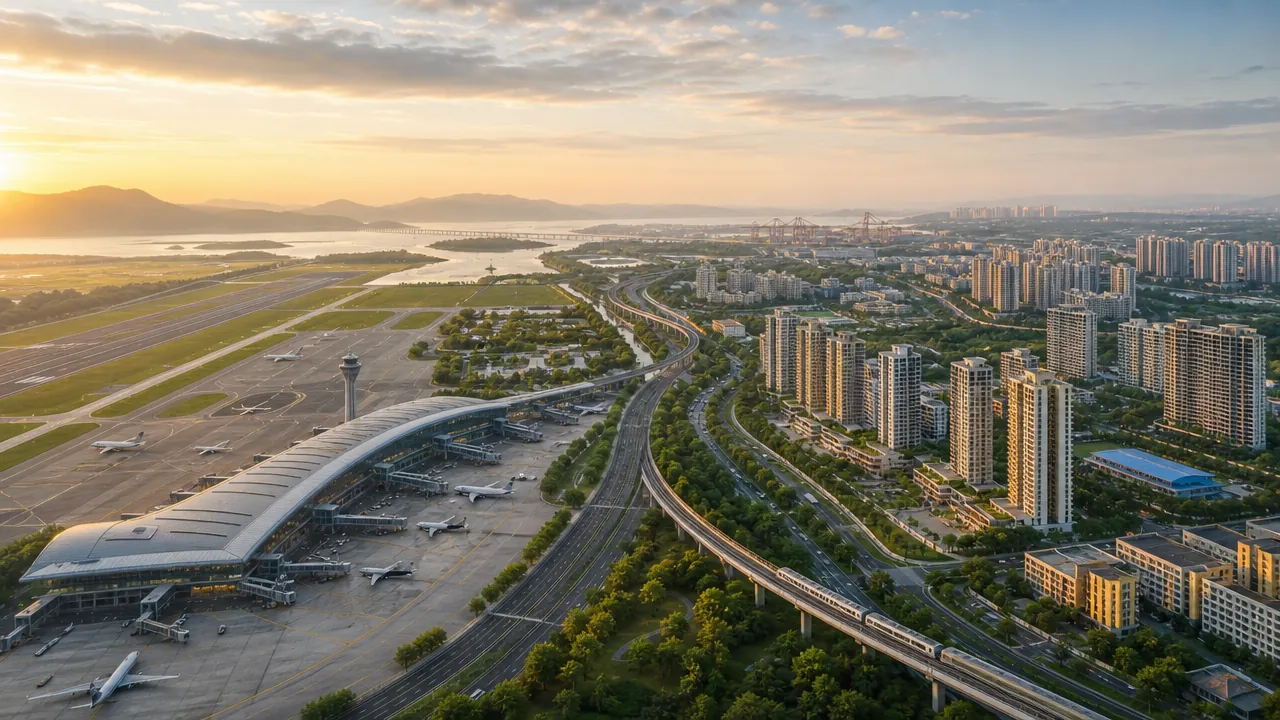
Navi Mumbai International Airport began commercial operations on December 25, 2025, changing the property story around the region. The airport is no longer only a planned infrastructure project. It is now an operating transport hub with the potential to influence housing, rentals, hospitality, aviation services and logistics across a much wider corridor.
That does not mean every nearby locality will experience the same benefit—or that every property close to the airport is automatically a good investment. The likely impact will depend on the type of demand an area can capture, the quality of its existing infrastructure, the depth of its rental market and the price already built into local valuations.
For buyers assessing Navi Mumbai airport real estate, the most useful question is not simply, “How close is the property to the terminal?” It is: Which demand engine will support this location over the next five to ten years?
Some areas are positioned for direct airport-related demand. Others have stronger family, commuter or institutional demand. A few may appeal mainly to buyers willing to accept a longer holding period and higher execution risk.
How Navi Mumbai International Airport Could Reshape the Property Market
Why airport operations can drive housing, rentals and commercial demand
An operating airport can affect real estate through several channels:
- Direct employment: Airport operators, airlines, ground-handling companies, security agencies, retailers, maintenance providers and other service businesses may create jobs over time.
- Passenger movement: Travellers can support hotels, serviced apartments, restaurants, convenience retail and transport services.
- Commuter housing: Employees may prefer homes that offer manageable travel times rather than living immediately beside the terminal.
- Business activity: Aviation-related offices, corporate travel, cargo services and support businesses can create commercial demand.
- Improved visibility: Areas previously viewed as peripheral may attract greater attention from developers, tenants and investors.
These effects usually develop in stages. The first wave is often driven by anticipation, construction activity and early employees. The next depends on passenger volumes, route growth, supporting businesses and the reliability of road and public transport connections.
An airport also does not create one single property market. It creates several overlapping markets:
- Passenger-facing residential demand near the airport and major access roads.
- Family housing demand in established neighbourhoods with schools, healthcare and retail.
- Budget housing demand from workers and first-time buyers.
- Hospitality and short-stay demand near transport nodes.
- Industrial and logistics demand connected more closely to ports, warehouses, manufacturing and freight movement than to passengers.
That last distinction is particularly important in Navi Mumbai. A location can be well positioned for airport passengers but poorly suited to logistics, or attractive for port-linked activity while remaining inconvenient for daily airport commuters.
Passenger demand versus port and logistics demand
Passenger-driven real estate usually values:
- Short and predictable terminal access
- Frequent public transport or road connectivity
- Hotels, restaurants and convenience retail
- Rental homes suitable for employees and mobile professionals
- A reasonably established residential environment
Port and logistics demand has a different profile. It depends more on industrial land, warehouse access, freight routes, truck movement, storage infrastructure and proximity to employment clusters. The tenant base may include warehouse staff, transport operators, manufacturing workers and managers rather than airline employees or passengers.
This distinction helps explain why Ulwe may have a more direct airport-residential story, while Dronagiri may appeal more to investors considering a longer-term port, logistics and industrial thesis. Panvel and New Panvel sit between these categories, supported by a broader mix of commuters, families, institutions and transport connections.
Ulwe: The Most Direct Airport-Linked Residential Opportunity
Ulwe is among the closest established residential areas to Navi Mumbai International Airport and is likely to be the first locality many buyers associate with the airport corridor. Its appeal comes from direct geographic proximity and the possibility of attracting airport employees, service providers, short-stay tenants and businesses serving travellers.
Why Ulwe could attract airport employees and service businesses
The most obvious tenant profile in Ulwe is the airport-linked worker who wants to reduce daily travel time. This could include airline and ground-service staff, retail and hospitality employees, transport operators, security personnel and professionals working for airport-support businesses.
The area may also benefit from businesses such as:
- Budget hotels and serviced apartments
- Restaurants and food outlets
- Car rental and driver services
- Small offices for travel, cargo or support companies
- Convenience retail for workers and nearby residents
However, these are potential demand categories, not guaranteed outcomes. Their scale will depend on airport passenger volumes, the number of businesses operating around the terminal and how effectively local roads and public transport handle the increase in movement.
Ulwe may suit buyers seeking direct airport exposure, particularly those comfortable with a location whose development story is still evolving. A completed project with reliable water, occupied surrounding buildings and practical access can be more valuable than a cheaper but isolated launch positioned on an airport-related promise.
The risk that airport expectations are already priced in
Ulwe’s proximity is widely understood. As a result, some properties may already carry an airport premium. A buyer should compare the quoted price not only with older transactions in Ulwe but also with better-established neighbouring markets.
The key test is whether the purchase price is supported by current utility:
- Can residents reach the terminal conveniently today?
- Is the building occupied and maintained?
- Are shops, schools, clinics and daily services available nearby?
- Would the home remain desirable if airport-led appreciation takes longer than expected?
Ulwe can offer the clearest airport connection, but it is not automatically the lowest-risk choice.
Panvel and New Panvel: The Corridor’s Most Diversified Demand Base
Panvel and New Panvel may not offer the same immediate airport proximity as Ulwe, but their demand base is broader. They serve families, commuters, students, healthcare users, professionals and businesses moving through the wider Navi Mumbai region.
Why diversified demand matters
A locality supported by several tenant and buyer groups is less dependent on one infrastructure project. In Panvel and New Panvel, demand can come from:
- Commuters travelling toward Mumbai and other Navi Mumbai nodes
- Families seeking comparatively spacious or accessible housing
- Students and employees connected to educational and institutional activity
- Logistics and transport workers
- People who want access to the airport without paying the highest proximity premium
This diversity can improve market liquidity—the ability to find tenants, buyers or resale interest. It may also reduce the risk of a property becoming dependent on a narrow airport workforce.
New Panvel, in particular, can appeal to end-users who prioritise established services and everyday convenience over being as close as possible to the terminal. Panvel’s broader transport and institutional role also gives it a separate demand foundation, even if airport-related growth is slower than expected.
Who should consider Panvel and New Panvel?
These areas may suit:
- End-users who want a practical family home
- Investors seeking a broader rental pool
- Buyers concerned about resale depth
- People willing to trade some airport proximity for established services
- Investors comparing airport demand with commuter and institutional demand
The main limitation is that travel time depends heavily on the actual route, traffic conditions and the property’s distance from the relevant road or rail connection. “Panvel” is a large market; a project’s precise location matters more than the locality label.
Kharghar: Established Livability With an Indirect Airport Benefit
Kharghar is a different proposition. Its airport benefit is more indirect, but its residential ecosystem is more established than that of several emerging nodes in the corridor.
Why families may prefer Kharghar
Kharghar’s appeal lies in the factors that support long-term end-user demand:
- Existing schools and educational institutions
- Healthcare access
- Retail and dining options
- Established housing societies
- Family-oriented neighbourhoods
- A more mature social and civic environment than many newer developments
A resident may use the airport occasionally without needing to live next to it. For such a buyer, reliable living conditions, school access and community infrastructure can matter more than shaving a few minutes off airport travel.
Kharghar may therefore suit buyers who want established livability with an additional airport-related connectivity benefit. It is less of a pure airport bet and more of a diversified residential investment.
Its trade-off is obvious: the buyer may pay for a mature market while receiving a less direct airport impact. Investors focused exclusively on airport-linked rental demand may find closer locations more compelling, whereas families and long-term end-users may value Kharghar’s existing ecosystem.
Taloja: Affordable Housing With Infrastructure-Dependent Upside
Taloja can attract buyers seeking a lower entry point within the broader Navi Mumbai region. Its potential airport connection may strengthen interest among budget-conscious households and workers linked to manufacturing, warehousing, construction, transport and other employment categories.
The affordability opportunity
Taloja’s likely demand is less passenger-facing than Ulwe’s. Its opportunity depends on whether affordability, employment access and improving regional connectivity combine to attract residents who cannot or do not want to pay for more established locations.
Potential tenants may include:
- Industrial and manufacturing employees
- Warehouse and logistics staff
- Young workers seeking lower rents
- First-time homebuyers
- Families prioritising unit size and price over immediate airport access
This makes Taloja a useful example of why airport-led real estate is not only about travellers. An airport can strengthen a regional employment network, but the residential benefit will be strongest where roads, water supply, public transport and neighbourhood services keep pace.
What buyers must examine closely
In Taloja, infrastructure quality should be treated as a valuation factor, not a footnote. Compare projects on:
- Water reliability and storage arrangements
- Road conditions and peak-hour travel times
- Public transport availability
- Occupancy in completed buildings
- Access to schools, clinics and grocery retail
- Distance from industrial activity and its effect on liveability
Taloja may suit a budget-led strategy, but a low purchase price does not compensate for weak daily utility. Buyers should calculate the cost and inconvenience of commuting rather than relying on a map-based distance to the airport.
Dronagiri: A Longer-Term Port, Logistics and Industrial Bet
Dronagiri offers a different investment thesis from the airport’s immediate residential catchment. Its longer-term potential is linked to the wider port, logistics and industrial economy of the region, with the airport adding another layer of strategic relevance.
Why the opportunity is different
Dronagiri may eventually benefit from businesses that value access to freight routes, industrial land, port-related activity and regional transport infrastructure. The demand could include workers, contractors, operators, warehouses and commercial users rather than primarily airport passengers.
This creates potential for long-term appreciation, but the timeline is less predictable. Logistics and industrial development depends on land use, approvals, road capacity, business investment and the arrival of identifiable projects or operators. Buyers should not treat every proposed development as a confirmed employment generator.
Dronagiri may suit investors who:
- Have a longer holding period
- Can tolerate uneven development
- Understand industrial and logistics markets
- Do not depend on immediate rental income
- Are comfortable with execution and infrastructure risk
It is less suitable for a buyer who needs a stable tenant quickly or expects airport proximity alone to produce near-term returns.
Karanjade and Pushpak Nagar: Entry-Level Options With Higher Risk
Karanjade and Pushpak Nagar may attract buyers looking for comparatively accessible entry points and exposure to the airport corridor. Pushpak Nagar’s location within the airport’s broader immediate influence makes it particularly relevant to airport-oriented discussions, while Karanjade may appeal to buyers comparing budget housing options around Panvel and the airport region.
The affordability case
These locations could draw:
- First-time buyers
- Airport and service-sector workers seeking lower-cost housing
- Investors targeting future rental demand
- Buyers priced out of more established nodes
The potential upside is also the principal risk: buyers may be entering before the surrounding ecosystem is fully mature. The quality of access roads, water, drainage, public transport, retail and building occupancy can vary significantly from one project to another.
For these areas, project-level due diligence is more important than the headline locality story. A completed, occupied development with functioning services may be preferable to a cheaper project that depends on several future upgrades.
Navi Mumbai Airport Corridor Areas Compared by Investment Objective
| Objective | Areas to examine first | Main demand profile | Primary risk |
|---|---|---|---|
| Direct airport exposure | Ulwe, Pushpak Nagar | Airport workers, services, short-stay and passenger-linked demand | Airport premium may already be priced in; infrastructure may vary |
| Diversified residential demand | Panvel, New Panvel | Families, commuters, institutions, logistics and end-users | Less direct airport impact; exact travel time varies |
| Established family living | Kharghar | End-users, families, students and professionals | Higher maturity premium; indirect airport benefit |
| Budget-led growth | Taloja, Karanjade | First-time buyers, industrial workers and price-sensitive tenants | Water, roads, occupancy and social infrastructure |
| Long-term logistics or industrial strategy | Dronagiri | Port, freight, industrial and commercial users | Longer holding period and project-execution uncertainty |
This comparison is not a ranking. It is a way to match location with objective. A family buying for immediate occupation may choose Kharghar or New Panvel even if Ulwe has stronger airport exposure. An investor with a high risk tolerance may examine Dronagiri, while a buyer seeking a direct airport-linked rental thesis may focus on Ulwe or Pushpak Nagar.
Buyer and Investor Checklist Before Purchasing Near the Airport
1. Measure actual terminal travel time
Test the route at different times of day. Record the journey during a normal period and a peak period. A property that looks close on a map may be less convenient if the final approach road is congested or public transport is limited.
2. Separate confirmed infrastructure from expected infrastructure
Ask for evidence of completed roads, operating transit services, municipal utilities and delivered social infrastructure. Treat proposed stations, future commercial districts, planned business parks and expected employment as potential upside—not as present value.
3. Inspect construction and building operations
Review the developer’s delivery record, approvals, maintenance arrangements, water systems, lifts, fire safety and common-area upkeep. In an emerging corridor, building quality can determine rental performance as much as location.
4. Check occupancy and rental depth
Visit the project at different times. Speak with residents, security staff and local brokers. Ask what tenant profiles are actually renting nearby, what rents are being achieved and how long vacant units typically remain unoccupied.
5. Compare the price with nearby alternatives
Do not compare only with older properties in the same locality. Examine better-established neighbouring nodes and calculate the premium for airport proximity. A premium may be reasonable when it is supported by superior access and current demand; it is harder to justify when it reflects only future expectations.
6. Match the property to the likely tenant
A compact furnished unit may suit mobile airport or service-sector workers. A larger home near schools may have stronger family demand. A property marketed to logistics employees should be assessed for access to employment zones, not only the passenger terminal.
7. Calculate the complete return
Estimate rent after maintenance, vacancy, property tax, furnishing, brokerage and financing costs. For resale, consider the number of comparable projects competing for buyers. A strong headline appreciation forecast does not guarantee a liquid exit.
Is Navi Mumbai Airport Real Estate Right for You?
Navi Mumbai International Airport has created a genuine new variable for the regional property market since commercial operations began on December 25, 2025. It can support a wider ecosystem of housing, rentals, services, hospitality and business activity. But the benefits will spread unevenly.
- Ulwe is the clearest choice for direct airport exposure, provided the price does not already assume excessive future growth.
- Panvel and New Panvel offer a more diversified demand base and may provide stronger liquidity for end-users and investors.
- Kharghar is better suited to buyers who prioritise established family living over maximum airport proximity.
- Taloja may appeal to budget-led buyers, but its upside depends heavily on infrastructure and employment access.
- Dronagiri is a higher-risk, longer-term option connected more to port, logistics and industrial development than to passenger demand alone.
- Karanjade and Pushpak Nagar can offer entry-level airport-corridor exposure, but project-level infrastructure and execution risks require careful pricing.
The strongest purchase is not necessarily the one nearest the terminal. It is the one where current utility, realistic rental demand, price and future potential are in balance. Compare shortlisted Navi Mumbai airport real estate locations against your budget, holding period and end-use or rental goals before making a decision.