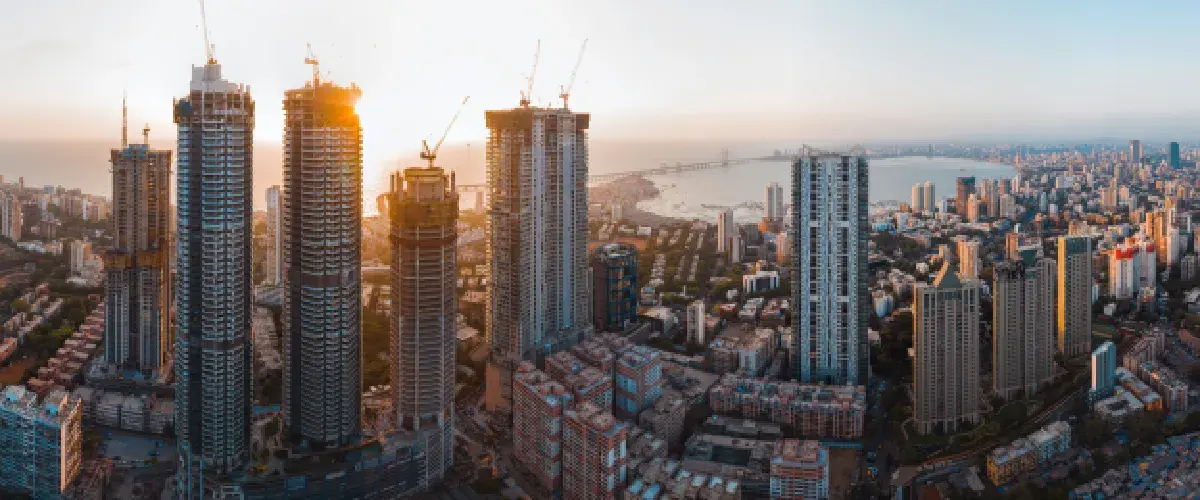
Mumbai's real estate market rewards clarity. In a city of extraordinary diversity — across neighbourhoods, price points, buyer profiles, and investment horizons — the ability to identify which locations offer the strongest combination of current liveability and long-term appreciation potential is the essential skill for anyone making a serious residential purchase decision.
The good news is that the fundamentals have rarely been clearer. A decade of sustained infrastructure investment has opened up new corridors of premium residential demand. A post-pandemic shift in buyer preferences has pushed the market toward larger, better-designed homes with genuine amenity ecosystems. And a broadening base of buyers — from senior professionals and NRI investors to young families and globally mobile executives — has deepened demand across multiple micro-markets simultaneously.
What follows is an honest assessment of the residential areas in Mumbai that are earning serious attention from informed buyers and investors in 2025 and 2026 — and why each one deserves to be on your consideration list.
Dadar: the case for Mumbai's best-connected address
No neighbourhood in Mumbai matches Dadar for sheer connectivity. The Western Line, Central Line, and Harbour Line all pass through, making it the only residential locality in the city with access to all three major rail corridors. Combined with improving road links via the Bandra-Worli Sea Link corridor and the Eastern Freeway, Dadar offers professionals the rare ability to reach virtually any part of Mumbai — South Mumbai, BKC, Lower Parel, Andheri, or the eastern suburbs — without excessive travel time or dependence on a single route.
The residential quality available in Dadar has risen sharply over the past several years. Redevelopment of ageing housing stock has brought a new generation of premium high-rises to the neighbourhood, offering floor plates, finishes, and amenity packages that compare favourably with more celebrated premium postcodes at meaningfully lower price points. Shivaji Park, one of the city's most beloved open spaces, anchors the western edge of the neighbourhood with greenery and community life that genuinely enhances the daily experience of living here.
For investors, Dadar's combination of strong rental demand — driven by its connectivity premium — and sustained redevelopment activity creates a compelling long-term appreciation case. Tenants at every income level prioritise commute convenience, and Dadar's multi-directional rail and road access makes it one of the most rentable addresses in the city. Three-bedroom apartments in premium Dadar developments have seen consistent demand from families and senior professionals who value space without sacrificing central location, and that demand shows no sign of softening as the neighbourhood continues to modernise.
Wadala: industrial heritage to premium residential destination
Wadala's transformation over the past decade is one of Mumbai's most striking urban stories. What was once an industrial zone of limited residential appeal has been comprehensively reimagined — first by large-scale redevelopment projects that replaced warehouses and mills with mixed-use towers, and more recently by infrastructure investments that have repositioned it as one of the city's best-connected mid-city addresses.
The neighbourhood's proximity to BKC is its most powerful credential. India's most significant business district sits within easy reach via the Eastern Freeway, and the proposed Metro Line 4 extension will add a further layer of connectivity that will make the journey even more seamless. The Monorail, already operational, provides an additional transport option and signals the level of infrastructure investment that government and private capital are directing toward this corridor. For professionals working in BKC who want a premium home without BKC-adjacent pricing, Wadala is the logical answer.
Premium residential projects in Wadala are delivering product quality that matches the neighbourhood's improving infrastructure story. Developments offering 3 and 4 BHK configurations with sea views, world-class amenities, and thoughtfully designed living spaces are available at price points that remain below comparable products in Bandra or Lower Parel. For investors, this gap between current pricing and fundamental value — supported by strong rental demand, improving connectivity, and a sustained development pipeline — represents exactly the kind of entry opportunity that has historically generated the best returns in Mumbai real estate.
Andheri: Mumbai's most versatile residential market
Andheri has sustained its position as one of Mumbai's most consistently in-demand residential areas for good reason. Its proximity to Chhatrapati Shivaji Maharaj International Airport makes it the natural choice for professionals with frequent travel requirements — a demographic that is large, well-compensated, and reliably present in the rental and purchase market. The surrounding commercial ecosystem, anchored by Lokhandwala, MIDC, and the Andheri-Kurla Road business belt, generates continuous residential demand from employees and executives who prioritise proximity to work.
The metro network has been transformative for Andheri. Multiple metro lines now pass through or connect directly to the area, dramatically improving access to western and central Mumbai and reducing dependence on the perpetually congested Western Express Highway. This infrastructure upgrade has extended Andheri's appeal beyond its traditional base of media and entertainment professionals to a broader cohort of buyers who value its combination of connectivity, retail access, and residential variety.
Andheri's residential market spans a wider price range than almost any other Mumbai neighbourhood — from affordable mid-segment apartments to genuinely premium developments in Lokhandwala and Versova that command prices comparable to established luxury markets. This breadth makes it a market that can accommodate buyers at different stages of their real estate journey, and it contributes to the liquidity and stability that makes Andheri a reliable long-term investment destination regardless of where the broader market cycle sits.
Powai: the knowledge economy address
Powai occupies a distinct and increasingly valuable niche in Mumbai's residential landscape. Built around the Hiranandani Business Park and adjacent to IIT Bombay, it functions as the city's knowledge economy hub — a self-contained ecosystem of technology companies, educational institutions, healthcare facilities, and retail destinations that provides residents with an unusually complete urban environment without requiring them to navigate the broader city on a daily basis.
The residential product available in Powai has consistently set a high standard. Hiranandani's master-planned township introduced Mumbai buyers to a quality of architecture, landscaping, and amenity provision that was genuinely ahead of its time, and subsequent developments in the area have maintained that bar. The result is a neighbourhood where the physical environment — tree-lined roads, lakeside walks, well-maintained common areas, and a sense of coherent urban planning — adds meaningfully to the experience of living there in ways that are difficult to quantify but immediately apparent.
For technology professionals and senior executives working in Powai's business park ecosystem, the ability to live within walking or cycling distance of work is a significant quality-of-life advantage in a city where commuting extracts such a high cost on time and energy. This captive professional demand base creates rental yields that are among the most stable in Mumbai, with low vacancy rates and tenants who renew reliably. For investors seeking a combination of yield stability and long-term appreciation in a neighbourhood with genuine competitive advantages, Powai remains one of the city's most dependable choices.
Navi Mumbai: the long-horizon opportunity
No assessment of Mumbai's top residential investment areas would be complete without addressing Navi Mumbai — a planned city that is entering a transformative phase driven by two catalysts of exceptional scale: the Navi Mumbai International Airport and the Atal Setu bridge. Together, these infrastructure projects are fundamentally altering Navi Mumbai's connectivity profile and accelerating the long-anticipated convergence of its property values toward those of comparable Mumbai locations.
Areas such as Kharghar, Ulwe, Panvel, and Dronagiri are attracting serious developer attention and premium project launches that would have been difficult to position even five years ago. The combination of larger land parcels, lower base prices, improving connectivity, and the infrastructure narrative creates an investment environment where patient capital can capture appreciation that compressed markets like South Mumbai or Bandra simply cannot offer.
For buyers with a five-to-ten-year investment horizon, Navi Mumbai offers the kind of structural growth story that established micro-markets no longer can. The airport will generate its own economy — hotels, logistics, commercial development, and the residential demand that follows employment creation at scale. Buyers who position themselves in the right locations ahead of this catalyst will benefit from appreciation that reflects both the infrastructure premium and the broader maturation of a planned city reaching the stage where its original vision is finally being delivered.
What to evaluate before you invest
Across all of Mumbai's top residential areas, the most successful investment decisions share common characteristics. They are made with a clear understanding of the infrastructure timeline — which projects are under construction, when they are expected to complete, and how they will specifically affect the micro-market in question. They are based on an honest assessment of developer quality — track record, financial stability, construction standards, and post-possession management capability.
They also reflect a realistic view of the buyer or tenant profile that will create demand for the asset. A 4 BHK apartment in a premium Wadala development targets a different demand base than a 2 BHK in Andheri, and understanding the depth and stability of that demand base is essential for projecting both yield and liquidity. Premium buyers and tenants have options, and they exercise them — which means product quality, building management, and amenity completeness matter more in the luxury segment than at any other price point.
Finally, the best investment decisions in Mumbai real estate are made with patience. The city's infrastructure projects run on long timelines, and the appreciation they drive accumulates gradually rather than in sudden jumps. Buyers who enter well-located, quality assets with a genuine medium-to-long-term horizon — and who resist the temptation to time entry and exit too precisely — have consistently outperformed those who approach the market speculatively. Mumbai rewards conviction in the right fundamentals, and the areas covered in this guide all have fundamentals that justify that conviction.
Summary
Mumbai's top residential investment areas in 2025 and 2026 are defined by a common set of strengths: improving connectivity, rising product quality, diversified demand, and price points that still reflect meaningful appreciation potential relative to their long-term trajectory. Dadar, Wadala, Andheri, Powai, and Navi Mumbai each offer a distinct version of this story — and together they represent the most compelling cross-section of the city's residential investment opportunity.
Whether you are buying a home to live in or an asset to grow, the question is not whether Mumbai real estate delivers — its track record on that front is unambiguous. The question is which micro-market, which developer, and which product type best aligns with your timeline, risk appetite, and lifestyle requirements. The areas covered here provide a strong starting point for that evaluation, and the fundamentals supporting each of them are as clear today as they have been at any point in recent memory.